You’ve watched countless matches, predicted outcomes to friends, and wondered whether your instincts might actually translate into something more tangible. Sports betting transforms passive viewing into active engagement, adding a layer of excitement that pure fandom cannot replicate. Yet stepping into this world without proper guidance is like navigating a foreign city without a map.
This guide covers everything a newcomer needs to know. From understanding basic terminology to placing your first wager responsibly, you’ll gain the knowledge required to approach sports betting with confidence rather than confusion. The goal isn’t to promise riches—it’s to ensure you start on solid footing.
What Is Sports Betting?
At its simplest, sports betting involves wagering money on the outcome of sporting events. You stake a certain amount, and if your prediction proves correct, you receive a payout determined by the odds offered. If you’re wrong, you lose your stake.
The practice has existed for centuries, though its modern form has evolved dramatically. Today’s sports betting landscape spans everything from traditional bookmaker shops to sophisticated online platforms accessible from your phone. Legalisation efforts across numerous jurisdictions have brought the industry into the mainstream, with regulated operators offering consumer protections that underground markets never could.
What distinguishes sports betting from pure gambling is the element of skill involved. While luck certainly plays a role, knowledgeable bettors who understand the sports they wager on consistently outperform those betting randomly. Research, analysis, and disciplined decision-making genuinely matter here.
Understanding Betting Odds
Odds represent the cornerstone of sports betting. They serve two purposes: indicating how likely an outcome is according to the bookmaker, and determining how much you’ll win if your bet succeeds.
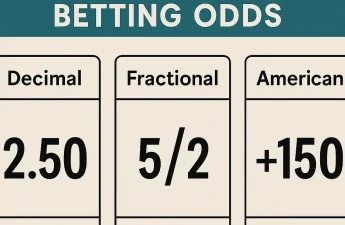
Three main formats exist worldwide. Decimal odds (common in Europe and Australia) show your total return per unit staked—odds of 2.50 mean a £10 bet returns £25 total. Fractional odds (traditional in the UK) display profit relative to stake—5/1 means £5 profit for every £1 wagered. American odds (standard in the US) use positive and negative numbers based on $100—plus figures show profit on a $100 stake, while minus figures indicate how much you must stake to win $100.
Regardless of format, lower odds suggest higher probability according to the bookmaker, while higher odds indicate less likely outcomes with greater potential rewards. Learning to convert between formats and calculate implied probability gives you a significant advantage when comparing prices across different operators.
Types of Sports Bets
The variety of available wagers extends far beyond simply picking winners. Understanding your options helps you find bets that match your knowledge and risk tolerance.
Moneyline/Match Result
The most straightforward bet type. You simply pick which team or player wins. In sports with draws (like football), you’ll typically see three options: home win, away win, or draw. The odds reflect each outcome’s perceived likelihood.
Point Spread/Handicap
Spread betting levels the playing field between mismatched opponents. The favourite must win by more than a specified margin, while the underdog can lose by less than that margin (or win outright) for their backers to collect. If a team is favoured by -6.5 points, they must win by 7 or more for spread bets on them to succeed.
Totals (Over/Under)
Rather than picking a winner, you predict whether the combined score exceeds or falls short of a number set by the bookmaker. A football match might have a total of 2.5 goals—you bet over if you expect three or more, under if you anticipate two or fewer.
Parlays/Accumulators
These combine multiple selections into a single bet. All picks must win for the bet to pay out, but the odds multiply together, creating potentially large returns from small stakes. A four-team parlay at 2.00 odds each selection would pay 16 times your stake. The catch is obvious: one wrong pick loses everything.
Prop Bets/Specials
Proposition bets focus on specific occurrences within an event rather than the final result. Which player scores first, how many corners in a half, whether a particular athlete exceeds a statistical threshold—the possibilities are endless. Props let you leverage specific knowledge that might not affect match outcomes.
Futures/Outrights
Long-term bets on season-long outcomes like championship winners, top scorers, or relegation candidates. These tie up your stake for extended periods but often offer attractive odds if you identify value early.
Choosing a Sportsbook
Selecting where to bet matters more than many beginners realise. Not all operators are created equal, and your choice affects everything from odds quality to withdrawal speed.
Licensing and Regulation
Only bet with licensed operators. Legitimate sportsbooks display their licensing information prominently and operate under regulatory oversight that protects consumers. Unlicensed sites offer no recourse if problems arise.
Odds Quality
Different bookmakers offer different prices on identical events. Over time, consistently getting slightly better odds compounds significantly. Comparing lines across multiple operators should become standard practice.
Market Coverage
Consider which sports and leagues matter to you. Some sportsbooks excel in football markets but offer limited options for tennis or esports. Others specialise in niche sports. Match your interests with appropriate coverage.
User Experience
The platform should be intuitive and responsive. Test navigation, check how quickly odds update, and ensure the mobile experience meets your needs if you plan to bet on the go.
Payment Options
Verify that deposit and withdrawal methods suit your preferences. Check processing times and any associated fees. Smooth transactions reduce friction in your betting experience.
Bonuses and Promotions
Welcome offers can provide genuine value, but read the terms carefully. Wagering requirements, odds restrictions, and time limits often apply. A flashy headline number means little if the conditions make it impractical to actually benefit.
Bankroll Management Fundamentals
Perhaps no concept matters more for long-term sustainability than proper bankroll management. Your bankroll is the total amount you’ve set aside specifically for betting—money you can afford to lose without affecting your daily life.
Establishing Your Bankroll
Determine an amount that represents genuine discretionary funds. This isn’t rent money, savings, or emergency funds. It’s entertainment budget that you’ve consciously allocated to betting. Be honest with yourself during this process.
Unit Sizing
Most experienced bettors work in units, typically representing 1-5% of their total bankroll per wager. A £500 bankroll with 2% unit sizing means £10 per bet. This approach prevents any single loss from devastating your funds and allows you to weather inevitable losing streaks.
The Importance of Consistency
Resist the temptation to chase losses with larger bets or deviate from your staking plan after wins. Emotional betting destroys bankrolls faster than bad picks. Systematic approaches may feel boring, but they keep you in the game long enough to develop genuine skill.
Record Keeping
Track every bet you place. Record the event, selection, odds, stake, and outcome. Reviewing this data reveals patterns in your betting—which sports yield profits, which bet types underperform, whether certain situations consistently mislead your judgment. Without records, you’re guessing about your own performance.
Research and Analysis
Successful sports betting requires more than intuition. It demands research, analysis, and continuous learning. The more informed your decisions, the better your results over time.
Statistical Analysis
Numbers don’t lie, though they can mislead without context. Team statistics, player performance metrics, historical head-to-head records, and situational data all contribute to informed predictions. Learn which statistics actually correlate with outcomes in your chosen sports.
News and Information
Injuries, suspensions, managerial changes, and tactical shifts all affect results. Following reliable news sources keeps you informed about factors that might not yet be reflected in the odds. Being first to react to significant developments can provide edge.
Understanding Markets
Recognise that odds represent opinions, not certainties. Bookmakers are skilled, but they’re not infallible. Markets sometimes misprice outcomes, especially in less popular leagues or sports where betting volumes are lower and expertise is scarcer.
Specialisation
Spreading attention across dozens of sports and leagues typically produces mediocre results. Focusing deeply on specific areas—perhaps one league or sport—builds expertise that generalists cannot match. Depth beats breadth in sports betting.
Common Beginner Mistakes to Avoid
Learning from others’ errors saves both money and frustration. These pitfalls claim countless newcomers.
Betting Without Research
Gut feelings occasionally win, but they’re not sustainable. Every wager should have reasoning behind it. If you cannot articulate why you’re making a bet, you probably shouldn’t make it.
Chasing Losses
After a losing bet, the urge to immediately bet again and recover your money is powerful. Resist it. Chasing losses typically leads to poor decisions, larger stakes than usual, and compounding damage to your bankroll.
Ignoring Value
Backing winners isn’t the same as betting profitably. A team might win 70% of the time, but if the odds imply 80% probability, betting on them loses money long-term. Understand the difference between likely outcomes and valuable bets.
Overcomplicating Parlays
Accumulators offering huge potential payouts seduce many beginners. The mathematical reality is that each additional selection dramatically reduces your win probability while bookmaker margins compound. Simple bets with genuine edge outperform hopeful long-shot parlays.
Emotional Betting
Never bet on your favourite team if you cannot analyse them objectively. Bias clouds judgment. Similarly, avoid betting when angry, drunk, or otherwise emotionally compromised. Clear thinking produces better decisions.
Responsible Gambling
Sports betting should enhance entertainment, not create problems. Maintaining a healthy relationship with betting requires awareness and boundaries.
Set limits before you start—time limits, deposit limits, loss limits. Stick to them without exception. Most regulated sportsbooks offer tools to help enforce these restrictions.
Recognise warning signs: betting more than you can afford, hiding betting activity from loved ones, chasing losses repeatedly, feeling anxious or irritable about betting outcomes, or neglecting responsibilities because of gambling. If any of these apply, seek support immediately.
Numerous organisations provide confidential help for gambling-related concerns. In the UK, GamCare and the National Gambling Helpline offer free support. Similar resources exist in most jurisdictions with legal betting. There’s no shame in asking for help—only in ignoring a problem.
Remember that losing is inherent to betting. Even skilled bettors lose more bets than they win on certain bet types. If losing a bet significantly impacts your mood or financial situation, you’re betting more than you should.
Getting Started: Your First Bet
Ready to place your first wager? Follow these steps.
First, choose a reputable, licensed sportsbook appropriate for your location. Complete registration and any required verification processes. Deposit an amount within your predetermined bankroll limits.
Browse available markets in a sport you genuinely understand. Look for a straightforward bet type—perhaps a simple match result or total. Analyse the event using whatever research methods you’ve developed. If the odds seem to offer value relative to your assessment, consider placing a small stake.
Start conservatively. Your initial bets are learning experiences as much as anything else. Pay attention to how you feel throughout the process, how the platform functions, and how the outcome affects your subsequent decisions.
Review results honestly. Whether you win or lose, evaluate your reasoning. Was your analysis sound? Would you make the same decision again given the same information? This reflection builds the foundation for long-term improvement.
Building Long-Term Success
Sports betting rewards patience, discipline, and continuous improvement. Nobody becomes an expert overnight, and even professionals experience significant losing periods.
Focus on process rather than outcomes in the short term. A good bet can lose; a bad bet can win. Over sufficient sample sizes, quality decision-making prevails. Trust the process during inevitable downswings.
Continue learning. Read analysis from respected sources, engage with betting communities, study new approaches to evaluating events. The landscape evolves constantly—stagnation means falling behind.
Maintain perspective. Sports betting is entertainment first. If it stops being enjoyable, something has gone wrong. Profitable betting is possible for some, but approaching it purely as a money-making scheme typically leads to disappointment.
Start Your Sports Betting Journey Today
Sports betting adds another dimension to following the games you love. Armed with knowledge of odds, bet types, bankroll management, and research fundamentals, you’re prepared to begin this journey responsibly.
Start small, stay disciplined, and never stop learning. Track your bets, analyse your results, and adjust your approach based on evidence rather than emotion. The bettors who thrive long-term are those who treat this as a skill to develop rather than a lottery to play.
Whether you’re seeking added excitement during match days or genuinely pursuing profitable betting, the principles remain the same. Understand the fundamentals, respect your limits, and make informed decisions. Everything else builds from there.