The FIFA World Cup 2026 represents a historic moment for football. For the first time, 48 nations will compete across three host countries—the United States, Canada, and Mexico. This expanded format creates unprecedented betting opportunities, with more matches, more markets, and more chances to find value than any previous tournament.
Whether you’re a seasoned bettor or planning your first World Cup wager, understanding the available markets and how odds function during a month-long tournament is essential. This guide covers everything from outright winners to in-play betting strategies, helping you navigate the most watched sporting event on the planet.
World Cup 2026: What Makes This Tournament Unique
Before examining betting markets, understanding the tournament’s structure matters. The 2026 World Cup breaks from tradition in several significant ways, each affecting how bookmakers price markets and where value might emerge.
The expansion from 32 to 48 teams dramatically increases total matches from 64 to 104. The group stage features 12 groups of four teams, with the top two from each group advancing alongside the eight best third-placed finishers. This format reduces group-stage eliminations while extending the knockout rounds.
Hosting duties span 16 cities across three nations. The United States hosts the majority of matches, including both semi-finals and the final, with venues stretching from Seattle to Miami. Canada contributes Toronto and Vancouver, while Mexico offers Guadalajara, Monterrey, and Mexico City’s iconic Estadio Azteca. This geographical spread introduces variables like climate, altitude, and travel distances that sharper bettors will consider.
The expanded field includes more nations from every confederation, meaning teams with limited major tournament experience will face established powers. Historical data becomes less predictive when so many participants lack comparable previous performances.
Outright Winner Markets
The tournament winner market attracts the most attention and the highest betting volumes. Bookmakers release these odds months before kickoff, adjusting them as qualification concludes, squads are announced, and the tournament progresses.
Understanding Tournament Favourite Pricing
Traditional powerhouses typically dominate the market. Brazil, France, Argentina, England, Germany, and Spain usually occupy the shortest prices, reflecting both historical success and current squad strength. However, expanded tournaments historically produce more surprises, as additional matches increase variance and fatigue factors.
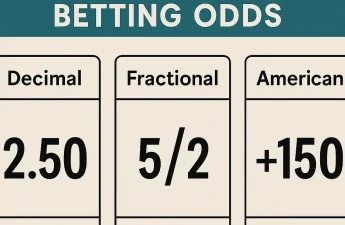
Outright odds appear high compared to domestic league markets because even dominant teams face multiple elimination hurdles. A side with a genuine 15% chance of winning might be priced around 6.00 (5/1, +500), which correctly reflects the difficulty of winning six or seven consecutive knockout matches against quality opposition.
Finding Value in Outright Markets
Early markets often present the best value. Bookmakers build larger margins into prices released far from kickoff, and public perception hasn’t yet coalesced around particular narratives. A team drawing a favourable group or avoiding certain opponents until later rounds can see their odds shorten considerably.
Consider each-way betting on outsiders. Most bookmakers offer each-way terms paying a fraction of odds (typically 1/4 or 1/5) for reaching the semi-finals or final. A strong outsider at 25.00 each-way offers meaningful returns even if they fall at the penultimate stage.
Watch for odds movement during the tournament. Group-stage performances reshape perceptions rapidly. A pre-tournament 15.00 shot who dominates their group might drift to 12.00 if the public remains unconvinced, or crash to 8.00 if sentiment shifts. Neither move necessarily reflects true probability changes.
Group Stage Betting Markets
The group stage offers concentrated betting opportunities across 12 simultaneous narratives. Each group generates multiple markets, from outright group winners to individual match outcomes.
Group Winner Markets
Every group has a designated favourite, but pricing differentials vary dramatically. Some groups feature clear hierarchies; others present genuine four-way contests. Identifying mispriced group winner odds requires assessing head-to-head likelihood across all possible permutations—not simply assuming the best team wins.
The expanded format’s structure matters here. With 24 teams advancing from groups (top two plus best third-placed teams), group winners face theoretically easier round-of-32 opponents. This pathway premium should factor into group winner assessments.
Team to Qualify Markets
These markets ask whether a specific team progresses beyond the group stage, regardless of finishing position. For heavy favourites in tough groups, “to qualify” often offers better value than “to win group” because it removes the requirement to finish top.
Third-place qualification complicates calculations. Finishing third isn’t elimination—it’s merely a less favourable knockout draw. Understanding which third-place records typically qualify (usually requiring four points or more) helps assess genuine elimination probabilities.
Group Stage Match Betting
Individual group matches present the highest volume of World Cup betting opportunities. Standard markets include match result (home/draw/away or Team A/draw/Team B), both teams to score, total goals over/under, Asian handicaps, and correct score.
Opening group matches deserve particular attention. Teams often approach these cautiously, prioritising avoiding defeat over chasing victory. Historical data supports unders and draw frequencies in tournament openers.
Final group matches produce different dynamics. When qualification scenarios are clear, motivations diverge sharply. A team already qualified might rotate players, while teams needing results throw everything forward. These situational factors regularly override pure ability assessments.
Knockout Stage Markets
Once elimination rounds begin, betting dynamics shift fundamentally. Every match produces a winner, meaning extra time and penalties become relevant considerations.
90 Minutes vs. To Qualify
Bookmakers offer separate markets for regulation time results and overall advancement. “To qualify” includes extra time and penalties; “90-minute result” does not. Understanding which market suits your view matters enormously.
Tight knockout matches frequently end level after 90 minutes. Backing draws in high-stakes elimination games between evenly matched teams offers value that casual bettors overlook because they focus on finding a “winner.”
Method of Victory Markets
Some bookmakers offer markets on how the winning team prevails—regulation time, extra time, or penalties. These markets let you express views on match character without predicting the actual winner. Expect defensive knockout matches between specific teams? Penalties might offer attractive odds without requiring you to pick which side converts more.
Quarter-Final and Semi-Final Outrights
As the tournament progresses, bookmakers offer markets on reaching or winning specific rounds. A team at 20.00 to win the tournament might be 4.00 to reach the semi-finals. These markets suit bettors who rate a team’s chances highly but lack confidence in their ability to win the entire tournament.
Player Markets
Individual player betting extends World Cup wagering beyond team outcomes. Golden Boot, Golden Ball, and various statistical markets let you leverage player-specific knowledge.
Golden Boot (Top Scorer)
The tournament’s leading scorer typically comes from a team reaching at least the semi-finals—more matches mean more scoring opportunities. However, penalty takers hold significant advantages, as spot-kicks count toward Golden Boot tallies.
Identifying forwards on teams likely to progress deep, who take penalties, and who play in systems generating chances typically outperforms simply backing the world’s best striker. Tournament history shows Golden Boot winners often weren’t considered the world’s premier forward entering the competition.
Golden Ball (Best Player)
This award recognises the tournament’s outstanding performer, voted by media. It favours players from successful teams who produce visible moments of individual brilliance. Midfielders and attackers win more frequently than defenders, regardless of actual contribution to team success.
Team Top Scorer
Each team has markets on their leading scorer. For nations with clear number-one strikers, these markets offer limited value. But teams with multiple scoring threats or unconventional systems sometimes misprice midfielders or wide players who carry significant goal burden.
Player Performance Markets
Bookmakers increasingly offer markets on player statistics: shots, passes, tackles, saves. These markets suit bettors with strong views on how specific matchups unfold. A winger facing a vulnerable full-back might exceed shot expectations; a goalkeeper facing a dominant attack might face more saves than usual.
In-Play Betting Strategies
Live betting during World Cup matches offers unique opportunities and risks. Odds adjust in real-time based on match events, creating windows where prices lag behind genuine probability shifts.
Reacting to Match Events
Goals obviously transform match odds instantly. However, other events—red cards, injuries to key players, tactical substitutions—affect probabilities more gradually. Recognising when an event’s true impact exceeds or falls short of the odds adjustment creates edges.
Early goals in knockout matches particularly distort markets. A team scoring in the 15th minute suddenly becomes heavy favourite to qualify, but 75 minutes remain. If the leading team sits back while the trailing team pushes forward, the expected goals picture might not reflect the scoreline. These situations arise frequently in tournament football.
Timing Your Bets
Odds fluctuate throughout matches based on time elapsed, scoreline, and perceived momentum. Backing favourites immediately after they concede sometimes offers value because markets overreact to single goals. Similarly, backing draws when one team leads but appears vulnerable can present opportunity before equalising goals arrive.
Avoid betting when odds are moving rapidly without clear cause—this usually indicates information you lack reaching the market. Stable prices suggest genuine consensus; volatile prices suggest uncertainty or informed money affecting the market.
Cash Out Considerations
Most sportsbooks offer cash-out options allowing you to settle bets before matches conclude. The maths rarely favour cash-out—bookmakers build margin into offered prices—but situations exist where locking in profit or limiting loss makes sense. Consider cash-out as a risk management tool rather than a profit maximisation strategy.
Tournament Specials and Prop Bets
Beyond standard markets, bookmakers create tournament-specific propositions covering everything from total goals to managerial departures.
Tournament Totals
Markets on total goals scored across the tournament, total red cards, highest-scoring game, and similar aggregates let you bet on tournament character rather than specific outcomes. The expanded format’s additional matches complicate comparison to historical tournaments, so be cautious extrapolating from previous World Cups.
Hosting Nation Performance
Will any host nation win the tournament? How far will each progress? These markets carry emotional public support that sometimes inflates prices on hosting nations succeeding, though home advantage does produce historically demonstrable benefits.
Unlikely Events
Long-shot propositions—a goalkeeper winning Golden Boot, a first-time winner, every group stage match finishing level—offer enormous odds with minuscule probabilities. These are entertainment bets rather than value opportunities. Approach them with stakes you’re comfortable treating as pure fun.
Key Factors for World Cup Betting Analysis
Successfully betting the World Cup requires integrating multiple analytical frameworks. Pure team quality assessments insufficiently capture tournament-specific dynamics.
Squad Depth
Tournaments test squads beyond starting elevens. Injuries, suspensions, and fatigue expose depth imbalances that might not affect single-match assessments. Teams with quality reserves who can step in without significant drop-off hold advantages in month-long competitions.
Tournament Experience
Some players and managers thrive under tournament pressure; others wilt. Previous World Cup performances offer data points, particularly for elimination-stage matches where mental factors intensify. Betting markets sometimes underweight this intangible factor.
Playing Style Suitability
Certain tactical approaches translate better to tournament football than others. Possession-dominant teams controlling matches conserve energy better than high-pressing sides. Compact defensive structures with clinical counter-attacks historically overperform underlying metrics in knockout contexts.
Fixture Schedule
Travel distances and rest periods between matches affect freshness, particularly for teams advancing deep. Examining the bracket to understand who benefits from scheduling advantages reveals edges that raw quality comparisons miss.
Climate and Venue Conditions
Matches across three countries in June and July present varied conditions. High-altitude Mexico City affects both performance and ball flight. Miami’s humidity challenges European teams accustomed to cooler conditions. West Coast evening matches kick off late Eastern time, potentially disrupting preparation routines.
Building Your World Cup Betting Strategy
Approaching the tournament systematically produces better results than reactive match-by-match wagering. Consider these strategic elements.
Pre-Tournament Positioning
Lock in outright positions before opening matches when markets haven’t absorbed tournament-specific information. Group draws reveal pathways; squad announcements confirm availability. Acting before public sentiment solidifies often captures better prices.
Bankroll Allocation
A month-long tournament with 104 matches can drain bankrolls rapidly without discipline. Determine total tournament budget, divide by expected number of bets, and stick to unit sizing. Avoid the temptation to “make up” early losses by oversizing later bets.
Selective Engagement
Not every match requires a bet. Some markets offer genuine edge; many don’t. Forcing positions on games you haven’t analysed thoroughly because “the World Cup is on” guarantees long-term losses. Quality over quantity applies especially during high-volume events.
Record Keeping
Track every World Cup bet with stake, odds, reasoning, and outcome. Post-tournament review reveals which analytical approaches worked, which bet types underperformed, and where emotional decisions overrode logical ones. This information improves future tournament betting.
Responsible World Cup Betting
Major tournaments carry heightened emotional stakes that can compromise betting discipline. National pride, ubiquitous media coverage, and social betting pressure create conditions where poor decisions flourish.
Set firm limits before the tournament begins. Determine maximum stakes, maximum daily losses, and walk-away points. When emotional involvement peaks—your country playing, crucial group deciders, final stages—discipline matters most.
Avoid betting under alcohol’s influence, which peaks during World Cup viewing. Social occasions combining watching matches with drinking create perfect conditions for impulsive, ill-considered wagers. If you’re drinking, stop betting.
Remember that enjoying the World Cup doesn’t require betting on every match. Sometimes the best position is no position—watching purely as a fan without financial stakes can enhance rather than diminish the experience.
Prepare for the Biggest Tournament in Football History
World Cup 2026 offers more betting opportunities than any previous tournament. Forty-eight teams across 104 matches generate countless markets, from straightforward match results to exotic propositions. The three-nation hosting format introduces variables previous World Cups lacked, creating potential edges for bettors who analyse beyond surface-level team quality.
Success requires preparation. Study the expanded format’s implications, analyse group compositions as draws occur, track squad news as announcements emerge, and position in outright markets before the tournament begins. During the event, maintain discipline—selective engagement, consistent staking, and emotional control separate profitable approaches from recreational ones.
Whether backing favourites to lift the trophy, hunting value on emerging nations, or focusing purely on match-by-match analysis, understanding available markets and how odds function gives you the foundation to bet this World Cup intelligently. The beautiful game’s biggest stage awaits—approach it prepared.