Best Roulette Numbers to Play: Hot & Cold Guide
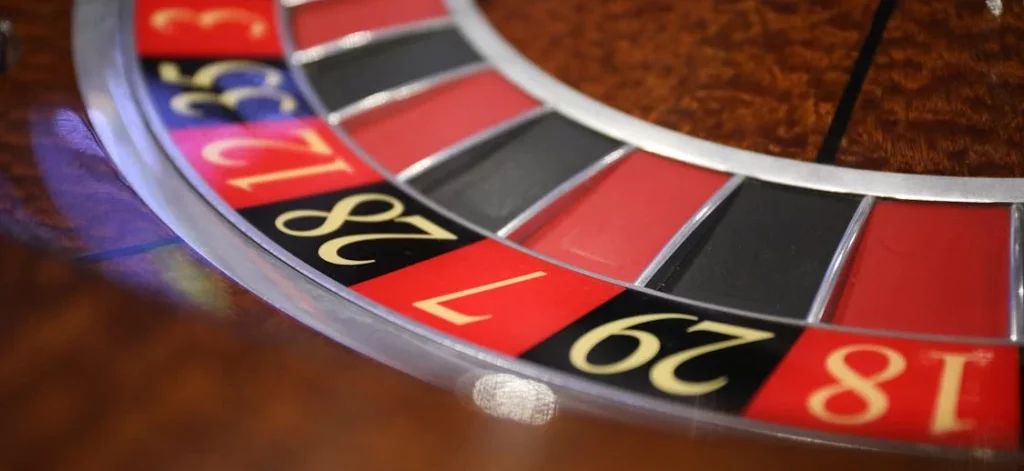
There are no mathematically best roulette numbers. Every pocket on a fair European wheel carries the same 1-in-37 (2.70%) probability on every spin, and hot or cold streaks have zero predictive value for the next outcome. The numbers most often called “hot” in casino lore – 7, 17, 23, and 24 – earn that reputation through cultural superstition, central placement on the betting layout, and famous wins (Sean Connery’s 1963 triple at Saint-Vincent, Mike Ashley’s £1.3 million payout on 17 at the Fifty Casino in Mayfair in 2008), not statistical bias. The coldest numbers usually cited – 3, 6, 13, and 34 – are equally arbitrary.
If you want to use a hot/cold framework, treat it as a structured way to choose which numbers to cover, not as a way to predict the wheel. The only mathematical edge you can actually control is variant selection: a single-zero European wheel returns 97.3% RTP versus 94.74% on American double-zero and just 92.31% on triple-zero. Play within a fixed bankroll, prefer European or French roulette, and treat any number-tracking system as entertainment, not income.
Key Takeaways: Statistical Verdict on Roulette Numbers
- Every number has an identical 2.70% probability on a European wheel – no number is mathematically better.
- Hot and cold are descriptions of past frequency, not predictors of future outcomes.
- Numbers like 17 and 7 are popular because of psychology and layout placement, not because they hit more often.
- The only real edge is variant selection: European (97.3% RTP) beats American (94.74%) and triple-zero (92.31%).
- No betting system can overcome the house edge – including Andrucci, Martingale, or any number-tracking strategy.
Hot & Cold Best Roulette Numbers: A Quick Reference Table
Across hundreds of player surveys and casino data, the same shortlist of hot and cold numbers reappears: 17, 7, 23, 24 (hot) and 3, 6, 13, 34 (cold). These labels reflect player behavior and cultural superstition, not wheel bias. Each number has an identical 1/37 (2.70%) probability of hitting on any given spin, regardless of its temperature.
| Number | Reputation | Why It’s Famous | True Probability | Standard Payout (Straight-Up) |
|---|---|---|---|---|
| 17 | Hottest | Sits dead-center on the betting layout; Sean Connery hit it three times in a row in 1963; Mike Ashley won £1.3M on it in 2008 | 1/37 = 2.70% | 35:1 |
| 7 | Hot | Selected by ~40% of Western players as lucky; universal cultural significance in Judeo-Christian, Islamic, and Hindu traditions | 1/37 = 2.70% | 35:1 |
| 23 | Hot | Neighbor of 17 on the layout; the “23 Enigma” pop-culture mystique | 1/37 = 2.70% | 35:1 |
| 24 | Hot | Sits in the high-traffic second dozen with 17 and 23 | 1/37 = 2.70% | 35:1 |
| 32 | Hot | Anchor of the Voisins du Zéro sector; Pedro Grendene Bartelle’s $3.5 million win on January 3, 2017 at Hotel Conrad, Punta del Este, Uruguay | 1/37 = 2.70% | 35:1 |
| 3 | Cold | Frequently cited in dealer anecdotes as a sleeper; no cultural significance | 1/37 = 2.70% | 35:1 |
| 6 | Cold | Adjacent to many sector boundaries; rarely picked emotionally | 1/37 = 2.70% | 35:1 |
| 13 | Cold | Western superstition tags 13 as unlucky (Triskaidekaphobia) | 1/37 = 2.70% | 35:1 |
| 34 | Cold | Edge of the layout; outside the main visual sweet spot | 1/37 = 2.70% | 35:1 |
The right-most column is identical for every number on the wheel. Hot/cold labels describe player behavior, not wheel behavior.
Understanding Roulette: Payouts, Range, and Mechanics
Standard Number Range and Pocket Count
A standard European roulette wheel contains 37 pockets numbered 0 through 36:
- 0 (green pocket, the house number)
- 1–36 (split between red and black pockets)
Each pocket has an equal 1/37 chance (2.70% probability) of being hit on any given spin. American roulette adds an additional 00 pocket, creating 38 total pockets and increasing the house edge to 5.26%.
The Mechanism: RNG vs. Physical Wheels
Physical Wheels (Land-Based & Live Casino): A mechanical ball spins around a rotating wheel. The result depends on ball velocity, wheel rotation, and friction. Modern casino wheels are precision-engineered and regularly rebalanced to ensure fairness.
RNG (Random Number Generator) – Online Roulette: Software generates the outcome. All licensed online casinos use RNGs audited by independent labs (iTech Labs, eCOGRA, GLI) to ensure statistical uniformity and prevent bias.
Provably Fair (Crypto Casinos): Uses cryptographic hashing (SHA-256) where the server seed is committed before your bet, and you can independently verify the result after the spin. Wolfbet uses this for all signature games.
Inside Bets vs. Outside Bets: Payouts and Odds
Roulette bets split into two categories: inside bets (single numbers or small groups with high payouts) and outside bets (large groups with low payouts).
Inside Bets (High Payout, Low Win Probability)
| Bet Type | Numbers Covered | Payout | Win Probability (European) | Example |
|---|---|---|---|---|
| Straight Up | 1 | 35:1 | 2.70% | Bet on 17 alone |
| Split | 2 | 17:1 | 5.40% | Bet on 17-18 (vertical or horizontal) |
| Street | 3 | 11:1 | 8.10% | Bet on 17-18-19 (horizontal row) |
| Corner (Square) | 4 | 8:1 | 10.80% | Bet on 17-18-20-21 intersection |
| Five Line | 5 | 6:1 | 13.50% | Bet on 0-1-2-3-4 |
| Six Line | 6 | 5:1 | 16.20% | Bet on two adjacent streets (17-18-19-20-21-22) |
Outside Bets (Low Payout, High Win Probability)
| Bet Type | Numbers Covered | Payout | Win Probability (European) | House Edge |
|---|---|---|---|---|
| Red / Black | 18 | 1:1 | 48.65% | 2.70% |
| Even / Odd | 18 | 1:1 | 48.65% | 2.70% |
| High (19-36) | 18 | 1:1 | 48.65% | 2.70% |
| Low (1-18) | 18 | 1:1 | 48.65% | 2.70% |
| Dozen | 12 | 2:1 | 32.43% | 2.70% |
| Column | 12 | 2:1 | 32.43% | 2.70% |
The payout ratios are mathematically designed so that every bet carries the same 2.70% house edge on a European wheel. Covering more numbers lowers variance but reduces profit potential.
What “Hot” and “Cold” Actually Mean in Roulette
Definition: Hot Numbers
A hot number is a pocket that has appeared more frequently than its statistical average during a specific rolling window – typically the last 100–500 spins displayed on the casino’s history board.
On a European wheel, each number is expected to appear about 13.5 times in 500 spins (500 ÷ 37 = 13.51). A number that has hit 20+ times in that same window gets flagged as hot, even though this falls within the normal statistical range (95% confidence interval: 6–21 hits). A hot number is not more likely to hit on the next spin. It describes past frequency, nothing more.
Definition: Cold Numbers
A cold number (also called a sleeper or overdue number) is one that has appeared fewer times than expected in the rolling window. A number that has come up only 4–5 times in 500 spins usually gets flagged cold.
The belief that cold numbers are due to hit is called the Gambler’s Fallacy, and it has been disproven by decades of statistical research and peer-reviewed casino studies.
Where the Displays Come From
Most casinos show recent results on LED scoreboards, sidebar panels (Evolution Gaming, Pragmatic Play, Playtech live tables), and history wheels on RNG platforms. The hot/cold calculation typically uses a rolling window of 100–500 spins, though manufacturers vary and the exact size is rarely disclosed.
The display is a marketing tool: it gives players a pattern to act on. Every Evolution Gaming, Pragmatic Play, and Playtech live roulette table at Wolfbet includes a hot/cold sidebar.
Why the Patterns Appear at All
Short-term clustering is a normal mathematical property of random sequences. Flip a fair coin 100 times and you will almost certainly see runs of 5–6 heads or tails. The same happens on a roulette wheel: in any 100-spin sample, three or four numbers will not appear at all, and one or two will appear five or six times. Those clusters are mathematically expected. They are noise, not signal.
The Statistical Reality: Every Spin Is Independent
The Probability of Each Number
On a single-zero European wheel with 37 pockets, the probability of any specific number landing on the next spin is exactly 1/37 ≈ 2.70%. On an American double-zero wheel with 38 pockets, it drops to 1/38 ≈ 2.63%. On the rare triple-zero variant (39 pockets) it falls further to 1/39 ≈ 2.56%.
That probability resets on every spin. The ball does not know that 17 just hit three times, and the laws of probability are not a self-correcting force.
Expected Frequency vs. Observed Frequency
Over 500 spins on a European wheel, each number is expected to appear 500 ÷ 37 ≈ 13.5 times. The standard deviation of a binomial(500, 1/37) distribution is roughly 3.6 hits. A 68% confidence interval for any one number’s hit count runs roughly 10–17 hits; the 95% interval stretches from about 6 to 21 hits.
A number that hits 21 times in 500 spins looks scorching hot but is statistically normal. A number that hits 6 times looks ice cold and is equally normal.
The Law of Large Numbers – Properly Understood
The Law of Large Numbers, formalized by Jacob Bernoulli and codified in every probability textbook, states that as the sample size grows toward infinity, the observed frequency of an event converges to its true probability. Roulette outcomes balance out only over enormous numbers of spins – tens of thousands, not dozens. Over a single evening of play (maybe 100–300 spins), variance dominates and any number can look hot or cold by pure chance.
The casino does not care which numbers are hot tonight. It cares that, over millions of spins across all its tables, the 2.70% house edge will deliver roughly $2.70 of profit for every $100 wagered. That math is what makes the wheel a business.
The Gambler’s Fallacy: Why Hot/Cold Betting Loses Money
The Fallacy, Defined
The Gambler’s Fallacy (also called the Monte Carlo Fallacy) is the mistaken belief that past outcomes of independent random events influence future probabilities. In roulette, it shows up two ways.
Due reasoning (negative recency): “Black hasn’t hit in 8 spins, so it’s due.” This is the logic that ruined gamblers at Monte Carlo on August 18, 1913, when black hit 26 times in a row and crowds lost millions betting red. The probability of that 26-run sequence on a single-zero wheel is roughly 1 in 68.4 million – extraordinary, but not impossible, and not a signal that red was owed.
Streak reasoning (positive recency / hot-hand fallacy): “Number 17 has hit three times this session – keep betting it.” This is the logic behind the Andrucci system and most hot-number strategies. It is equally fallacious for independent events.
Hard Evidence: A Peer-Reviewed Casino Study
The most rigorous field study on gambler’s fallacy in roulette is Croson and Sundali (2005), “The Gambler’s Fallacy and the Hot Hand: Empirical Data from Casinos,” Journal of Risk and Uncertainty vol. 30, no. 3, pp. 195–209 (DOI: 10.1007/s11166-005-1153-2). The researchers analyzed 18 hours of security videotape from a large Reno, Nevada casino in July 1998 – 904 spins, 139 identifiable players, and 24,131 individual bets.
After streaks of 5 of the same outcome, the fallacy became statistically significant (p < .05). After streaks of 6 or more, 85% of bets were placed against the streak – versus the 50% null hypothesis (p < .01). The longer a streak runs, the more confident players become that it must end, and the more wrong they are. The same paper documented a parallel hot-hand bias: players placed more bets per spin after winning (13.62 inside numbers on average) than after losing (9.21).
Why Your Brain Falls for It
Tversky and Kahneman (1974, Science) showed that the Gambler’s Fallacy arises from the representativeness heuristic – humans expect small samples to look like the long-run average. We perceive a string of 6 reds as not random enough and predict black to restore visual balance. That is a cognitive bug, not a mathematical reality.
Roulette Variants Compared: Where Number Strategy Actually Pays
The single biggest mathematical decision a roulette player makes has nothing to do with which numbers to bet. It is which wheel to play.
| Variant | Pockets | Zeroes | Mechanism | House Edge | RTP | Notes |
|---|---|---|---|---|---|---|
| French Roulette (with La Partage) | 37 | 0 | Physical wheel (land-based) / RNG (online) | 1.35% on even-money bets | 98.65% | Best player odds anywhere; La Partage returns half of even-money losses when ball lands on 0 |
| European Roulette | 37 | 0 | Physical wheel (live) / RNG (online) | 2.70% | 97.30% | Standard single-zero wheel; identical edge on every bet type |
| American Roulette | 38 | 0 and 00 | Physical wheel | 5.26% | 94.74% | Double-zero nearly doubles the casino’s edge compared to European |
| Triple-Zero Roulette | 39 | 0, 00, 000 | Physical wheel (rare) | 7.69% | 92.31% | Found mostly in some U.S. casinos; avoid |
| Lightning / XXXTreme Roulette | 37 | 0 | RNG with randomized multipliers | ~2.90% (effective) | ~97.10% | Multipliers up to 500x (Lightning) or 2,000x (XXXTreme) on straight-up bets only; straight-up payout reduced from 35:1 to 29:1 or 19:1 |
On a $100 bankroll over 100 spins, the difference compounds. A European player’s theoretical expected loss is $2.70; an American player’s is $5.26 – nearly double. A French roulette player betting only red/black expects to lose just $1.35. Variant selection alone is worth more than any hot/cold tracking system.
Wolfbet’s roulette lobby includes European Roulette by Platipus (97% RTP), Roulette Live and First Person Roulette by Evolution Gaming (97.3%), French Roulette Gold (98.65%), Auto-Roulette (97.3%), and the multiplier variants Lightning, Auto Lightning, and XXXTreme Lightning Roulette. Browse all 230+ roulette tables here.
The Cultural & Psychological Roots of “Best” Numbers
17 – The King of the Felt
Number 17 is the most-bet single number in the world. Three forces explain it.
First, visual centrality. On a standard roulette layout, 17 sits in the exact middle of the betting grid – middle column, middle dozen, surrounded by 14, 16, 18, and 20. The eye lands there first.
Second, James Bond. The Bond franchise immortalized roulette glamour, and Sean Connery’s 1963 session at the Casino de la Vallée in Saint-Vincent, Italy reportedly produced three consecutive hits on 17, paying out around 17 million Italian lire (~£10,000 at the time). A publicist interview later suggested the run may have been a staged promotion for Dr. No – the legend nonetheless cemented 17 as the iconic roulette number.
Third, Mike Ashley. In 2008, the former Newcastle United owner placed a £480,000 complete bet covering every combination including 17 at the Fifty Casino in Mayfair, London. When 17 hit and his combined payout reached £1.3 million, he reportedly told the croupier, “That’ll do me, thanks very much,” and walked away.
7 – Universal Luck
The number 7 is selected as a lucky pick by approximately 40% of Western roulette players, making it the second-most-wagered number globally after 17. The preference stems from cultural symbolism across Judeo-Christian, Islamic, and Hindu traditions, where 7 represents completeness and perfection: seven days of creation, seven heavens, seven steps of the Buddha. It is the default lucky pick for casual players placing their first bet.
23 – The Enigma Neighbor
23 sits two rows below 17 on the layout and is part of the second dozen. The “23 Enigma” – a conspiratorial belief that the number 23 appears uncannily often in life – gained pop-culture traction through Robert Anton Wilson, the Jim Carrey film The Number 23, and internet folklore. None of this affects probability; all of it affects how often the chip lands there.
Avoided Numbers
Western players avoid 13 out of triskaidekaphobia (fear of 13). East Asian players tend to avoid 4 (homophonous with “death” in Mandarin and Cantonese) and favor 8 (homophonous with “prosperity”). Numbers like 3, 6, and 34 carry no superstition for or against – they simply attract fewer emotional chips and appear less often in player surveys.
The Physical Wheel Sequence: Why Numbers Aren’t in Order
The numbers on a roulette wheel are not arranged in numerical order. They follow a specific sequence designed to randomize clusters and prevent mechanical bias.
European/French Wheel Clockwise Order
0-32-15-19-4-21-2-25-17-34-6-27-13-36-11-30-8-23-10-5-24-16-33-1-20-14-31-9-22-18-29-7-28-12-35-3-26
Adjacent pockets on the physical wheel have very different numbers on the betting layout, reducing the chance that a mechanical bias – worn frets, unbalanced wheels, dealer signatures – would favor a specific region. Modern casino wheels are precision-engineered and regularly rebalanced.
Wheel-Sector Bets: The European Tradition of Number Grouping
French and European roulette tables – at land-based casinos and on live Wolfbet tables – feature a racetrack interface that lets you bet on wheel sectors rather than individual numbers. These bets group numbers based on their position on the physical wheel, not the betting layout. They are the closest thing roulette has to a structured best-numbers strategy.
Voisins du Zéro (“Neighbors of Zero”)
Covers the 17 numbers on the wheel that wrap around the zero – from 22 to 25 in wheel order. Requires 9 chips (mix of splits and trios). Win rate per spin: 45.9%. House edge remains 2.70%.
Tiers du Cylindre (“Thirds of the Wheel”)
Covers 12 numbers on the opposite side of the wheel from zero – from 27 to 33. Requires 6 chips placed as six split bets (5/8, 10/11, 13/16, 23/24, 27/30, 33/36). Win rate: 32.4%. House edge: 2.70%.
Orphelins (“Orphans”)
Covers the 8 numbers left over from the other two sectors: 1, 6, 9, 14, 17, 20, 31, 34. Requires 5 chips – one straight-up on 1, plus splits on 6/9, 14/17, 17/20, and 31/34. Note that 17 is covered twice, giving it a higher effective payout. Win rate: 24.3%. House edge: 2.70%.
Neighbors Bet
A 5-chip bet on any chosen number plus the two numbers on each side of it on the physical wheel. Useful if you like a specific number but want to hedge against the ball landing one or two pockets off.
None of these bets lowers the house edge – every wager on a European table carries the same 2.70% built-in advantage. What they provide is structure: a disciplined way to commit a fixed number of chips to a coherent wheel region rather than scattering bets emotionally.
The Andrucci System: The Most Popular Hot-Number Strategy
The Andrucci system is the textbook hot-number betting strategy, claiming to apply chaos theory to roulette. The procedure:
- Observe the wheel for 30–37 spins (without betting, or while betting flat outside money) and record every winning number.
- Identify the number that has appeared most frequently.
- Place a straight-up bet on that number for up to 35 consecutive spins, hoping to capture the 35:1 payout before the streak breaks.
- If you win, stop or reset. If 35 spins pass with no hit, restart the observation cycle.
Does Andrucci Work?
No. Andrucci is the gambler’s fallacy in formal clothing. It assumes a pattern persists across independent spins – which the mathematics explicitly forbids. The expected value per straight-up bet on a European wheel is exactly −2.70% of stake per spin. Across 35 spins betting one unit each, your expected loss is 35 × 2.70% = 0.945 units.
What Andrucci does offer is psychological structure: a defined entry point, a defined exit point, and a single number to focus on. As entertainment with a strict bankroll cap, it is no worse than any other discretionary betting pattern.
Comparison to Other Systems
| System | How It Works | Edge Reduction | Bankroll Risk |
|---|---|---|---|
| Martingale | Double bet after every loss on even-money | None | Catastrophic on long streaks; hits table limit |
| Fibonacci | Bet sizes follow 1, 1, 2, 3, 5, 8… | None | High; smoother than Martingale |
| D’Alembert | Increase by 1 unit after loss, decrease by 1 after win | None | Moderate |
| James Bond | Flat structured coverage of 25 of 37 numbers | None | Moderate; loses badly on 1–12 |
| Andrucci | Track 30–37 spins, then straight-up on the hottest | None | High; long dry spells common |
No betting system in this table reduces the house edge. The math behind every roulette progression has been formally proven impossible to beat against an unbiased wheel.
Advanced Betting Systems: 1-3-2-6, 3-2 Rule, and Labouchère
What is the 1-3-2-6 System in Roulette?
The 1-3-2-6 system is a positive progression strategy where you increase your bet size after wins, not losses. The sequence refers to your unit size:
- Spin 1: Bet 1 unit
- Spin 2 (if win): Bet 3 units
- Spin 3 (if win): Bet 2 units
- Spin 4 (if win): Bet 6 units
After any loss, you restart at 1 unit. Works best on even-money bets (Red/Black, Odd/Even).
You only risk 1 unit from your own pocket – all profits come from your wins. If you win all four spins, your profit is 12 units on a 12-unit total bet. The catch: it relies on winning streaks, which are random. Over long play, the house edge (2.70%) applies to every bet regardless.
What is the 3-2 Rule in Roulette?
The 3-2 rule is a flat-bet coverage strategy where you divide your bet into 5 chips:
- 3 chips on an even-money bet (e.g., Red)
- 2 chips on a column or dozen (e.g., Middle Dozen)
This covers 24 of 37 numbers on a European wheel, giving you a win rate of approximately 64.9% per spin. You hit often, which feels good psychologically. The house edge is still 2.70% – over long play, you lose 2.70% of your total wagered amount regardless of coverage.
The Labouchère System for Number Sequences
The Labouchère system (also called the cancellation system) uses a written sequence of numbers to determine bet size:
- Write down a line of numbers (e.g., 1, 2, 3, 4)
- Bet the sum of the first and last numbers (1 + 4 = 5 units)
- If you win, cross out those two numbers
- If you lose, add the loss amount to the end of the line
- Repeat until all numbers are crossed out
This is a negative progression system – you increase stakes after losses to recover previous losses. During losing streaks it leads to aggressive betting and rapid bankroll depletion.
The Exception That Proves the Rule: Biased Wheels
The only documented way to genuinely beat roulette without cheating is to find a physically biased wheel – real equipment whose mechanical imperfections cause the ball to favor certain pockets.
Joseph Jagger (Monte Carlo, 1873)
A British mechanic with engineering instincts, Jagger hired six clerks to record results from all six wheels at the Beaux-Arts Casino in Monte Carlo. One wheel showed clear bias toward nine grouped numbers: 7, 8, 9, 17, 18, 19, 22, 28, and 29. He bet those numbers for several days and walked away with roughly £65,000 (over £3 million in today’s money).
Dr. Richard Jarecki (Europe, 1960s–70s)
A medical professor who identified worn frets and unbalanced wheels across European casinos. According to his New York Times obituary (August 8, 2018), he earned $1.25 million between 1964 and 1969 by rotating between venues to avoid detection before returning to the United States in the mid-1970s.
Gonzalo Garcia-Pelayo (Madrid, 1990s)
A Spanish record producer who, with his family, recorded thousands of spins at the Casino Gran Madrid and used early-1990s computer analysis to identify biased pockets – turning the casino’s 2.6% edge into roughly a 15% player edge. He won an estimated €1.5 million at Casino Gran Madrid alone, with family total winnings estimated at around €5 million across Spain, Europe, and Las Vegas. When Casino Gran Madrid sued, Spain’s Supreme Court ruled in his favor in 2004 – exploiting a mechanical flaw was not illegal.
Why This Doesn’t Help You Online
Modern casino wheels are precision-engineered, regularly rebalanced, and continuously audited. The era of exploitable bias in mainstream venues is essentially over. In online roulette, the wheel is software – a Random Number Generator audited by independent labs such as iTech Labs, eCOGRA, or GLI. Bias is mathematically impossible on a properly seeded RNG.
On crypto-native platforms using provably fair protocols, every outcome is cryptographically verifiable: the server seed is hashed and committed before your bet, your client seed contributes to the result, and you can recompute the outcome yourself after the spin. Wolfbet publishes a Provably Fair verifier for every signature game outcome.
How to Use Hot/Cold Data Without Losing Money
Many players enjoy tracking hot and cold numbers – it adds engagement and structure to the session. Here is a disciplined approach that keeps the entertainment value without the financial damage.
1. Play European or French, never American
The 2.56-percentage-point difference in house edge between American and European is larger than any edge any number-tracking system could ever produce. At Wolfbet, filter to European or French tables before you sit down.
2. Set a hard session bankroll
Define a number – say, 100 units – that you are willing to lose for the session. Stop when it’s gone. Do not redeposit. Wolfbet’s account dashboard lets you set deposit limits, loss limits, and session time reminders before you start playing; use them.
3. Use the hot-number display as a chip-placement aid, not a prediction
If you would have bet emotionally on five random numbers anyway, biasing those five toward currently-hot numbers neither helps nor hurts your expectation – but it gives you a repeatable routine and prevents impulsive scatter-betting that bleeds bankroll faster.
4. Cap your straight-up exposure
Straight-up bets carry the highest variance in roulette. A standard deviation of roughly 5.83 units per single-unit bet means swings are violent. Limit straight-up bets to a small percentage of total stake; balance with outside bets like red/black or dozens.
5. Treat Lightning Roulette multipliers as a separate category
Evolution Gaming’s Lightning, Auto Lightning, and XXXTreme Lightning Roulette apply 50x–500x (and up to 2,000x in XXXTreme) multipliers to a handful of random straight-up numbers each round. If a hot number is also struck by lightning, the payout potential is enormous – but the standard straight-up payout is reduced from 35:1 to 29:1 (Lightning) or 19:1 (XXXTreme) to fund the multipliers. The effective house edge is slightly higher than standard European. Track the multipliers, not the hot/cold board.
6. Walk away after any single big hit
Variance giveth, variance taketh. The single biggest behavioral mistake hot-number players make is letting it ride after a 35:1 win. The next spin’s expected value is the same negative 2.70% as every other spin – but the chip stack is now larger, so the dollar loss expectation is bigger. Bank the win; reset the bankroll.
Responsible Gambling: The Most Important Number Is Your Limit
Roulette is entertainment with a built-in mathematical cost. Treating it as anything else – an investment, an income source, a way to win back prior losses – is the pathway to gambling-related harm.
The World Health Organization classifies gambling disorder alongside substance use disorders in both DSM-5 and ICD-11. The WHO Gambling Fact Sheet, citing Goodwin et al. (International Gambling Studies, 2017), states that for every person who gambles at high-risk levels, an average of six others (usually non-gamblers) are affected. A 2023 systematic review and meta-analysis in Current Addiction Reports (Springer, DOI 10.1007/s40429-023-00510-6) found the international prevalence of self-exclusion at 0.26% (95%CI 0.16–0.43), significantly higher among participants in the problem gambling category (15.20%, 95%CI 11.00–19.39). Researchers attribute this low uptake to stigma, complex registration, and lack of awareness.
Practical steps:
- Set deposit and loss limits before you play, not during. Limits set during a losing session are almost always raised; limits set in advance are protective.
- Use session time reminders. Roulette spins fast (about 30–40 per hour live, 60+ on auto-roulette); time distortion is a documented risk factor.
- Never chase losses. Chasing is the operational signature of harmful gambling. If you find yourself doubling stakes to get back to even, stop the session.
- Use self-exclusion if needed. Wolfbet offers immediate account suspension and self-exclusion through its support team at support@wolfbet.com. Independent tools include GamCare, BeGambleAware, ResponsibleGambling.org, and the free BetBlocker app, which blocks gambling sites on your devices without requiring registration.
- Talk about it. Research shows people developing gambling problems most often turn to friends and family first. Knowing the warning signs – chasing, lying about play, neglecting work or relationships, escalating stake size – matters.
All games at Wolfbet are independently audited by iTech Labs for RNG fairness. Every signature in-house game (Dice, Limbo, Plinko, HiLo, Keno) operates at a transparent 1% house edge, and the platform’s real-time statistics panel highlights betting-behavior patterns that may indicate problem gambling. If your play stops being fun, the account-controls page is designed to make stepping away frictionless.
Frequently Asked Questions
What is the Most Common Winning Number in Roulette?
Statistically, there is no most common number – each has exactly a 1-in-37 (2.70%) probability on every single spin.
In player perception, numbers 17, 7, 23, and 24 are the most-bet and most-celebrated hot numbers, accounting for approximately 35% of all single-number wagers globally. They hit no more frequently than numbers 3, 6, 13, and 34, which most players ignore.
Are Hot Numbers More Likely to Hit Next?
No. Each roulette spin is statistically independent. A number that has hit 5 times in the last 100 spins has exactly the same 2.70% probability of hitting on spin 101 as a number that has not hit at all. The belief otherwise is the Gambler’s Fallacy.
Are Cold Numbers “Due” to Win?
No. A number that hasn’t hit in 200 spins is not more likely to hit on spin 201. It is exactly as likely as any other number. The wheel has no memory.
What’s the Best Roulette Strategy for Beginners?
Play European or French roulette rather than American. Beyond that, flat-bet outside wagers (red/black, odd/even, dozens, columns) keep variance low and session length high. If you prefer inside bets, the Orphelins sector bet covers 8 numbers (including 17 twice) for 5 chips and is a structured, conventional choice.
Does the Andrucci System Actually Work?
No system overcomes the house edge, and Andrucci is no exception. Its selection criterion is the gambler’s fallacy applied to chaos theory – which is not how chaos theory works. Use it as entertainment with a strict bankroll cap, nothing more.
Is Online Roulette Rigged Against Hot Numbers?
At licensed casinos with audited RNGs, no. The Random Number Generator produces statistically uniform outcomes tested by independent labs. On provably fair crypto platforms like Wolfbet, you can cryptographically verify each individual outcome after the spin.
What Number Did James Bond Bet?
17 is the iconic Bond number, most prominently featured in Diamonds Are Forever. The real-life basis is Sean Connery’s 1963 session at the Casino de la Vallée in Saint-Vincent, where 17 reportedly hit three times in a row – though a later publicist interview cast doubt on whether it was staged for the Dr. No press tour.
What’s the Difference Between European and American Roulette House Edge?
European: 2.70%. American: 5.26%. The difference is the second green pocket (00) on American wheels, which doesn’t change payouts but increases the casino’s mathematical advantage. French roulette with La Partage drops the edge further to 1.35% on even-money bets – the best odds available in standard roulette.
How Many Numbers Should I Bet to Maximize My Chances?
Mathematically, covering more numbers increases hit frequency but reduces payout proportionally – the expected value stays at exactly −2.70% regardless. In practice, covering 5–8 numbers via Orphelins or a personalized lucky-numbers cluster balances win frequency against variance without spreading chips too thin.
Can I Beat Roulette Long-Term?
On a fair wheel with an audited RNG, no – the negative expectation is mathematically certain over enough spins. The only historical exceptions are physical bias exploitation (Jagger, Jarecki, Garcia-Pelayo) and visual ballistic prediction, neither of which applies to modern online roulette.
Final Verdict: Use Hot & Cold for Structure, Not Prediction
The wheel does not remember. The math does not forgive poor variant selection. And no system, classical or modern, beats a properly randomized wheel.
17, 7, 23, and 24 are no more likely to hit than 3, 6, 13, or 34. If you enjoy tracking hot numbers, use them to decide which numbers to cover in a given session – not as a signal that certain numbers are due or on a run. That distinction is the difference between using a tool as a routine and believing it predicts the future.
Choose European or French roulette. Define your loss limit before you sit down. Set a straight-up chip budget you would not mind losing entirely. Walk away after big wins. Everything else is entertainment.
Educational content only. Gambling involves risk. 18+. If you or someone you know is struggling, contact BeGambleAware or the National Problem Gambling Helpline.
Sources & Further Reading
- Wizard of Odds: Hot Numbers in Roulette Michael Shackleford, Wizard of Odds – comprehensive analysis of roulette number frequency, including Monte Carlo simulation data on hot-number distributions and variance.
- Gambler’s Fallacy – Wikipedia Wikimedia Foundation – foundational reference for understanding cognitive biases in gambling, including the 1913 Monte Carlo run of 26 consecutive blacks.
- The Gambler’s Fallacy and the Hot Hand: Empirical Data from Casinos Croson, R. & Sundali, J. (2005). Journal of Risk and Uncertainty, 30(3), 195–209. – peer-reviewed field study analyzing 904 roulette spins and 24,131 individual bets from a live casino table.
- BeGambleAware – Responsible Gambling Resources GambleAware – authoritative source for responsible gambling tools, self-exclusion options, and evidence-based harm reduction strategies.
- PokerNews: Roulette Numbers Guide PokerNews Casino – comprehensive roulette education covering number selection, probability, inside/outside bets, and betting strategies.
About the author
Marcus Reed
81 articlesTrending
![Aztec Clusters slot Review [BGaming]](https://wolfbet.com/blog/wp-content/uploads/2025/02/aztec-clusters-slot-crypto-casino-768x383.jpg)
Aztec Clusters slot Review [BGaming]

How to Play Dogecoin Dice (and Why the 1% Edge Matters)
Craps Table Explained
![Big Bass Bonanza Slot Review [Pragmatic Play]](https://wolfbet.com/blog/wp-content/uploads/2025/02/big-bass-bonanza-slot-online-casino-wolfbet-768x439.jpg)
Big Bass Bonanza Slot Review [Pragmatic Play]

![Le Bandit Slot Review [Hacksaw Gaming]](https://wolfbet.com/blog/wp-content/uploads/2025/02/le-bandit-slot-online-casino-wolfbet-768x432.jpg)
![12 Dice Gambling Games You Should Know About [List]](https://wolfbet.com/blog/wp-content/uploads/2025/01/Wolf.bet-Dice-Gambling-Games-THUMBNAIL-768x256.jpeg)