Bitcoin Casino South Africa (2026): Legal Status, Crypto Deposits and How to Play
South Africa has one of the most active online gambling markets in Africa, almost none of it legal under domestic law, and almost none of it meaningfully enforced against the people actually playing. A bitcoin casino south africa players can use is simultaneously offshore, unlicensed in SA, and completely accessible – because no South African recreational player has ever been prosecuted for gambling online.
That’s the reality for anyone looking at a bitcoin casino south africa search. This guide covers the law accurately, explains why card deposits keep getting declined, what SARS says about your winnings, and where crypto fits into all of it.
Is Bitcoin Casino Gambling Legal in South Africa?
Not for operators. For players, it’s complicated – but in practice, very few consequences.
The National Gambling Act 7 of 2004 (NGA) is the governing law. Section 11 prohibits any person from engaging in or making available an “interactive game” unless licensed under the Act. The licensed categories are physical casinos, bingo, betting on sports/races, and limited payout machines. Online casino gaming – slots, roulette, blackjack, poker – falls outside what the Act licences. No South African provincial licensing authority has issued a licence for online casino play.
The National Gambling Board (NGB) is unambiguous on its website: “The answer to whether online or interactive gambling is legal in South Africa is a simple and unequivocal no, with the exception of online sports betting.” The penalties written into law are severe for operators: a fine of R10 million or up to 10 years’ imprisonment for providing an unlicensed interactive gambling service.
Players are in a different position. The Act doesn’t contain equivalent penalties for recreational players who use offshore sites. Following a 2010 North Gauteng High Court judgment, enforcement has consistently targeted operators, banks, and payment processors – not individuals sitting at home. There are no reported cases of a South African recreational player being criminally charged for playing at an offshore casino.
The practical risk for players is financial rather than criminal. The NGB has noted that winnings from unlawful gambling are not legally protected and could theoretically be confiscated. More concretely: if a dispute arises with an offshore casino, no South African regulator will intervene on your behalf. Your only recourse is whatever complaint process the operator’s licence jurisdiction (Curaçao, Anjouan, Malta) provides.
Reform That Never Arrived
The National Gambling Amendment Act of 2008 would have created a licensing framework for online gambling. Sixteen years later, it has never been proclaimed into force. The Remote Gambling Bill (B11-2024), introduced by the Democratic Alliance as a private member’s bill in April 2024, would create a national licensing regime. As of mid-2026 it has made no meaningful parliamentary progress. Online casino licensing in South Africa is, at best, years away.
The current position: offshore bitcoin casinos are illegal for operators to run, accessible for players to use, and actively used by millions of South Africans.
Why Your Bank Card Gets Declined
This is the question that brings most South African players to bitcoin casinos in the first place.
SA banks frequently decline card transactions coded as online gambling – sometimes silently, sometimes with a “transaction declined by merchant” message, sometimes mid-deposit. The South African Bookmakers Association (SABA) has actively lobbied FNB, Absa, Standard Bank, Nedbank and Capitec to block payments to offshore operators. Their 2024 YieldSec report estimated that unlicensed offshore operators capture around 62% of South African online gambling activity and divert R50 billion or more in gross gaming revenue offshore annually. The banking response has been increased transaction blocking.
The SARB’s exchange control regulations add another layer. South Africans have a Single Discretionary Allowance (SDA) for offshore transfers – raised from R1 million to R2 million per calendar year in April 2026, the largest adjustment in 15 years. This isn’t specifically a gambling restriction, but offshore casino deposits do consume it, and banks processing gambling-coded transactions face compliance scrutiny from the SARB.
Crypto sidesteps both problems. A transfer from a Luno or VALR wallet to a casino deposit address routes through the blockchain, not through a South African bank. No merchant category code. No bank decline. No exchange-control flag at the transfer stage. This is the structural reason that bitcoin casinos have become the default for South African online casino players – not ideology, not anonymity, but the simple fact that deposits actually go through.
Crypto in South Africa: A Large and Growing Market
South Africa has the most developed crypto market in Africa. Luno – the largest exchange serving SA – reported over 6.3 million South African users as of October 2025, having added more than 530,000 in the prior 12 months. VALR, SA-headquartered and Africa’s largest exchange by trading volume, surpassed 1 million users in 2024. AltCoinTrader, Binance and Yellow Card round out the main options.
The Financial Sector Conduct Authority (FSCA) brought crypto asset service providers (CASPs) under formal regulation in June 2023. By December 2025, 300 of 512 licence applications had been approved, 14 declined, and 121 withdrawn. This is a maturing regulated market, not a grey zone.
For casino use specifically, the three coins that matter most are Bitcoin (the benchmark), USDT (stable value, low fees on TRC-20, the most practical for repeated play), and ETH (faster than BTC, widely supported). All three are available on Luno and VALR with ZAR on-ramps via instant EFT.
ZAR-backed stablecoins now also exist domestically: ZARP (backed by Old Mutual Wealth), ZAR Supercoin (ZARSC, backed at Absa by Super Group), and ZAR Universal (ZARU, an institutional consortium including Luno, EasyEquities and Sanlam). None are yet widely supported at offshore casinos, but the infrastructure is developing.
How to Deposit at a Bitcoin Casino from South Africa
The process is less complicated than most guides suggest.
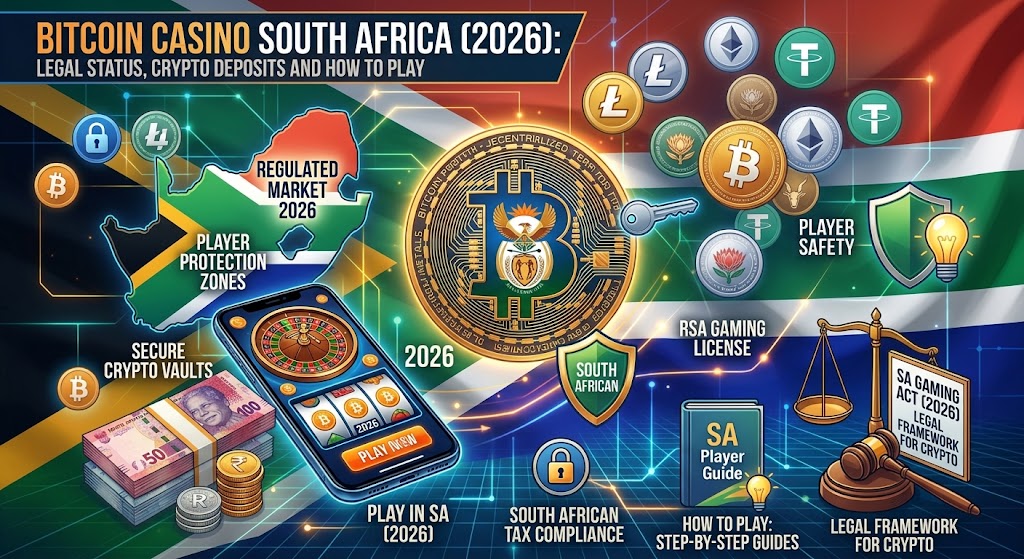
Open an account at Luno or VALR using your South African ID and a selfie – both are FSCA-licensed and use instant EFT for ZAR deposits. Buy USDT (choose the TRC-20 network for lowest fees) or BTC. Log in to your casino, open the cashier, select USDT or BTC, and copy the deposit address shown. Back in your exchange app, send to that address on the same network. USDT/TRC-20 confirms in under two minutes. BTC takes 10-30 minutes depending on network conditions.
One thing that matters and is often glossed over: network selection. If the casino shows a USDT deposit address on TRC-20 and you send USDT on ERC-20, the funds don’t arrive. Confirm the network before sending – it’s a one-way mistake.
Minimum deposits at most bitcoin casinos are $10-$20 equivalent, often lower. Withdrawals reverse the process: you provide your exchange wallet address, the casino sends crypto, and it lands in Luno or VALR where you can sell to ZAR.
Tax on Winnings: What SARS Says
Recreational gambling winnings are not taxable income in South Africa. SARS treats winnings from luck-based activities as capital windfalls rather than income, so a slot win or a table-game payout – however large – is not subject to income tax. SARS recommends noting these amounts under “amounts not taxable” rather than simply ignoring them.
The distinction for professional gamblers: if SARS determines you’re gambling in a systematic, business-like manner, winnings become assessable income taxed at your marginal rate (up to 45%). Losses are ring-fenced under Section 20A and can only offset future gambling income.
The crypto angle adds a wrinkle most guides miss. SARS treats cryptocurrency as an asset, not currency. Disposing of crypto – including converting it to ZAR – is a taxable event. The capital gains rules: a 40% inclusion rate applies for individuals, giving an effective maximum rate of around 18%, with an annual exclusion of R40,000 (rising to R50,000 from the 2027 tax year). If you hold crypto for active trading rather than investment, SARS may assess gains as income instead.
What this means practically: you can win R50,000 at a bitcoin casino and the gambling win itself is not taxable. But when you convert that crypto to ZAR on Luno, if the coin’s rand value rose between when you received it and when you converted it, that appreciation is a CGT event. From 1 March 2026, South African exchanges are required to report trade data to SARS under the Crypto-Asset Reporting Framework (CARF), so this isn’t a theoretical concern.
Keep records: note the ZAR value of any crypto you receive as winnings on the day you receive it. That’s your cost base for any subsequent conversion.
(General information, not tax advice. Consult a registered tax practitioner for your situation.)
Games: What South African Players Actually Play
Bitcoin casinos carry the full range of casino content – and the best bitcoin casino south africa options cover the formats local players actually care about. For South African players, a few categories are particularly relevant.
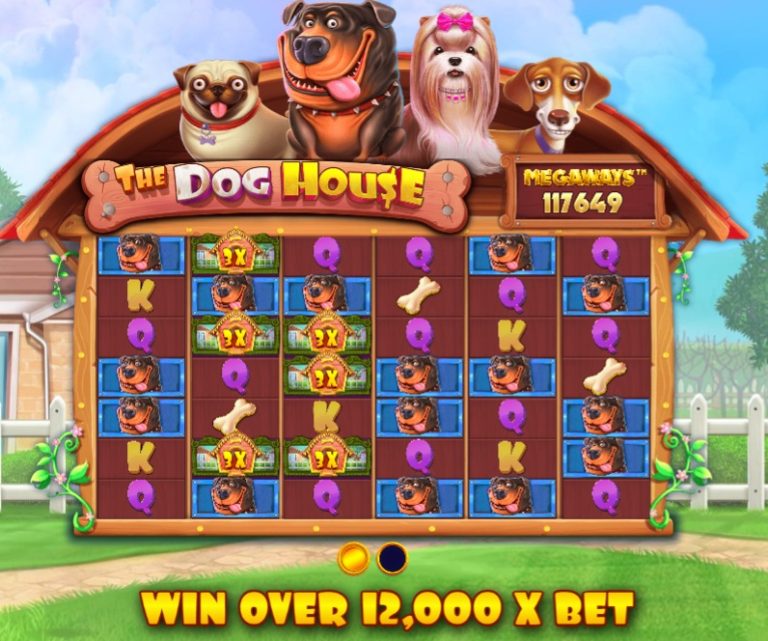
Slots – the dominant format globally and in SA – cover thousands of titles from providers like Pragmatic Play, Play’n GO, Nolimit City, Hacksaw Gaming, and BGaming. RTPs typically run 94-97%. Wolfbet carries 11,000+ slots from 90+ studios.
Sports betting resonates strongly in SA, with rugby union, cricket, Premier Soccer League football, and Formula 1 generating consistent volume. Wolfbet’s sportsbook covers all four with live markets.
Provably fair Originals – Crash games (Aviator, JetX), Dice, Plinko, Mines, Limbo – are the distinctively crypto-native formats. Wolfbet’s in-house Originals run on a 1% house edge with cryptographic result verification. You can check every outcome independently – nothing equivalent exists at a standard slot machine.
Live dealer via Evolution Gaming: real dealers, HD stream, blackjack, roulette, baccarat and game-show formats available around the clock.
Wolfbet for South African Players
Wolfbet (wolfbet.com) is one of the more established crypto casino south africa players can access – South Africa appears on neither the main prohibited-jurisdictions list nor the restricted-slots list in the operator’s terms (Cipher Games Ltd, Marshall Islands reg. 125414, Anjouan licence ALSI-132405048-FI3). The cashier displays balances in ZAR alongside the crypto value, so you’re always playing in familiar rand terms even though transactions run in crypto.
Supported cryptocurrencies include BTC, ETH, USDT, DOGE, XRP, LTC, TRX, BNB, ADA, XLM and several others – covering what South African players actually hold via Luno and VALR.
The platform doesn’t offer a traditional welcome bonus. Instead the model is built around rakeback (10% from VIP level 2, up to 15% at higher tiers, no wagering requirements), a daily Wolf Race wagering contest, weekly promo codes, and a 16-tier Wolf Pack VIP programme. For players who deposit regularly, this compounds significantly over time. For someone making one deposit and leaving, it’ll feel like less than a percentage-match welcome offer.
Withdrawal limits sit at $8,000 per week and $30,000 per month; most crypto cashouts process within the hour. The Anjouan licence means dispute resolution goes through the licensor rather than a South African authority – standard for offshore crypto casinos, but worth knowing before you deposit anything significant.
Choosing a Bitcoin Casino: What to Check
A licence number means something, but not everything. Curaçao and Anjouan are the most common frameworks for offshore crypto casinos – both require the operator to maintain accounts, respond to player complaints through a formal process, and meet AML requirements. Neither offers the consumer protection of a Malta Gaming Authority or UKGC licence. Wolfbet’s Anjouan licence means complaints escalate to gaming-licences.com rather than a domestic authority.
Beyond the licence: check withdrawal track record on AskGamblers and Casino.guru, specifically how the casino responds to unresolved complaints – not the average star rating. Look for clearly disclosed terms (wagering requirements, max bets during bonus play, withdrawal caps). Confirm South Africa is not restricted before registering.
Don’t use a VPN to access a casino that geo-blocks South Africa. The casino’s terms will typically void winnings if circumvention is detected.
Responsible Gambling
South Africa’s legal gambling market generated R75 billion in gross gaming revenue in FY2024/25, with legal betting now accounting for roughly 70% of that figure. The unlicensed offshore market adds substantially more. Problem gambling is a real harm at any scale.
The National Responsible Gambling Programme (NRGP) runs a free, confidential counselling helpline: 0800 006 008, available 24/7. WhatsApp support is available on 076 675 0710.
Wolfbet provides deposit limits, loss limits, session timers, and self-exclusion tools. Use them proactively – the site will not prompt you.
FAQ
Is bitcoin casino gambling legal in South Africa? Not for operators. The National Gambling Act 2004 prohibits online casino gaming that isn’t provincially licensed – and no province licences online casino play. Offshore operators serving SA are technically in breach of SA law. For individual players, the Act contains no equivalent criminal penalties, and no South African recreational player has been prosecuted for gambling online.
Has anyone been prosecuted for playing at an offshore casino in SA? No. Enforcement has consistently targeted operators, payment processors and banks – not individual players. The NGB confirms the Act targets providers, not players.
Are gambling winnings taxed in South Africa? Recreational gambling winnings are not subject to income tax – SARS treats them as non-taxable capital windfalls. Professional gamblers face income tax on winnings. Converting crypto winnings to ZAR may trigger CGT if the coin appreciated since you received it.
Do I need to declare gambling winnings to SARS? Recreational winnings are non-taxable but should be noted on your tax return under “amounts not taxable” rather than omitted. Crypto conversions to ZAR are reportable CGT events if a gain arose. From March 2026, SA exchanges report transaction data to SARS under CARF.
Why does my bank card get declined at online casinos? South African banks increasingly block or decline card transactions coded as online gambling (merchant category MCC 7995) following pressure from the bookmaking industry. Crypto deposits route through the blockchain and are not subject to this block.
Do bitcoin casinos support ZAR? Not for deposits – crypto goes in and out. But Wolfbet and most major crypto casinos display balances in ZAR, so you see your balance and bet sizes in rand while transacting in BTC or USDT.
Which crypto is best for SA casino deposits? USDT on TRC-20 (Tron network): price-stable, confirms in under 2 minutes, fees under R15. Buy it on Luno or VALR with instant EFT. BTC works but is slower and more expensive per transaction.
Is Wolfbet available to South African players? Yes. South Africa is not on Wolfbet’s prohibited-jurisdictions list. Wolfbet holds an Anjouan Gaming licence and accepts South African players aged 18+.
Can I use a VPN at a crypto casino? Most casinos prohibit VPN use to bypass geo-restrictions and will void winnings if detected. Play at casinos that explicitly accept South African players – which most crypto casinos do – rather than circumventing blocks.
Last updated August 2026. South Africa’s gambling legal framework is under periodic review. The Remote Gambling Bill (B11-2024) has made no significant parliamentary progress as of mid-2026. Check back for updates.
This article is for informational purposes only. It is not legal or tax advice. Consult a registered attorney or tax practitioner for advice specific to your situation. If gambling is causing harm, contact the NRGP helpline: 0800 006 008.
About the author
Marcus Reed
81 articlesTrending
![Roulette Basics for Beginners [GUIDE]](https://wolfbet.com/blog/wp-content/uploads/2025/01/roulette-beginners-e1737907243412-768x314.webp)
Roulette Basics for Beginners [GUIDE]
![Slots Basics for Beginners [GUIDE]](https://wolfbet.com/blog/wp-content/uploads/2025/01/slots-beginners-e1737908409411-768x372.webp)
Slots Basics for Beginners [GUIDE]

What Are Provably Fair Games? A Guide to Crypto Casino Transparency

Poker Rakeback Explained: How to Turn Rake Into Revenue
![Piggy Riches 2 Megaways Review [RED TIGER]](https://wolfbet.com/blog/wp-content/uploads/2025/02/piggy-riches-2-megaways-slot-casino-online-game-768x422.jpg)