Crypto Gambling: Tracking Your Real Losses When Prices Move

Updated: 28 October 2026
When you gamble with cryptocurrency, the number on your screen rarely tells you the whole story. A balance can grow because the coin you hold has risen, not because you won. It can shrink on paper while you are still ahead in the currency you think in. Either way, the picture is distorted, and that distortion makes it easier to play more than you planned.
This guide explains why crypto makes losses hard to see, how to track what you have actually spent in a currency you understand, and which warning signs are specific to crypto gambling. For the general framework, read signs of gambling addiction: a self-check and how much money can you afford to spend on casino entertainment?.
Why crypto hides losses
Three things make crypto gambling harder to track than gambling with cash.
The balance changes without play. If you hold $500 in a coin and the price rises by 20%, your balance grows even if you have not won a single roll. Players sometimes read that growth as winnings, and bet the extra as if it were free money.
The loss can look smaller than it is. If the price falls after a loss, the amount you lost in your local currency may be larger than the number on the screen suggests, or smaller if the price rose. You cannot judge the result from the balance alone.
Transactions cannot be reversed. A deposit or withdrawal is final once confirmed. There is no bank to call and no statement that corrects a mistake. That makes careful record keeping more important, not less.
The core rule: track in the currency you think in
Keep your records in your local currency, such as dollars, euros or pounds, not only in crypto. The point is to see what your gambling has actually cost you in money you can spend on rent, food and savings.
Use this method:
- Record each deposit. Note the date, the amount of crypto you sent, and the value of that amount in your local currency at the time you sent it. Most exchanges and price sites show the historical rate for a date.
- Record each withdrawal. Use the same method: date, amount in crypto, value in your local currency at the time.
- Calculate your net result. Total withdrawals in your local currency, minus total deposits in your local currency. That is the true result for the period.
- Review it at a fixed time. Once a week or once a month is enough for most people.
The net result, in your local currency, is what matters. The balance on the platform is a snapshot in crypto, and it can mislead you.
A simple tracking template
You can use a spreadsheet or any budgeting tool that lets you enter amounts in your local currency. A spreadsheet with these columns works well:
| Date | Type | Amount in crypto | Coin | Value in local currency at the time | Running net result |
|---|---|---|---|---|---|
| 2026-10-01 | Deposit | 0.01 | BTC | 800 | -800 |
| 2026-10-03 | Withdrawal | 0.008 | BTC | 620 | -180 |
The running net result shows whether you are ahead or behind in your local currency. Update it each time you deposit or withdraw.
Choosing a tool. Any spreadsheet or budgeting app can do this job. Choose one that lets you enter amounts in your local currency and that you trust with your financial data. Check its privacy terms before you link it to any account.
Tax. Crypto transactions can have tax consequences in many countries, and the rules differ widely. Keep your records in a form that supports any tax reporting you need, and speak to a qualified adviser about your own situation.
Warning signs specific to crypto gambling
Watch for these patterns, which are more common with crypto than with other gambling:
- Checking prices constantly, or feeling anxious about the market while you are not playing.
- Playing more because your balance has grown in crypto terms, even though your local-currency result has not improved.
- Using crypto you were saving for something else, such as rent, a deposit or a long-term holding.
- Moving money between coins or converting back and forth to chase a better rate, rather than tracking the net result.
- Feeling that the money is not real because it is “just crypto”, which makes it easier to spend.
- Hiding your activity from people close to you, using the fact that crypto transactions are less visible to others as a reason to keep it secret.
- Losing track of total deposits because you have made many small transfers.
If you recognise two or more of these, read how to stop gambling: a practical plan and consider talking to someone you trust.
Set your limits in a currency you know
Your limits should be set in a currency you use every day, such as your local currency, and checked against your records each month. Do not raise a limit because the value of your crypto has gone up. A higher balance is not a higher budget.
When you set limits with support at support@wolfbet.com, ask how they apply to your account, and keep a note of what you agreed.
Check every transaction before you confirm it
Because crypto transactions are final, a small mistake can be expensive. Before you confirm a deposit or withdrawal:
- check the address character by character, or copy and paste it rather than typing it,
- confirm the network matches the one the platform asks for,
- check the amount, including the currency and the number of decimal places,
- send a small test amount first when you are using a new address.
These checks take a few seconds. A lost transfer can take months to resolve, if it can be resolved at all.
Keep someone informed
Crypto can make spending easy to hide, even from yourself. Ask a trusted person to check your records with you once a month. You do not need to share every transaction, but sharing your net result and your limits makes it harder to drift.
If you find it hard to stop checking prices or to keep to your limits, the helplines in gambling addiction help: hotlines, treatment and support for families can help you think through what to do next.
Summary
Crypto makes gambling losses harder to see, because balances move with the market and transactions cannot be undone. Track your deposits and withdrawals in your local currency, look at the net result rather than the balance, set your limits in a currency you know, and check every transaction before you confirm it. If the numbers and the feelings do not match, trust the numbers.
Next steps
- If you want to check where you stand, take the self-check on the signs of gambling addiction.
- If you want to set a budget in your local currency, read how much money can you afford to spend on casino entertainment?.
- For the wider picture of responsible play at Wolfbet, read responsible gambling at Wolfbet.
Gambling involves financial risk. Only play with money you can afford to lose. 18+.
About the author
Marcus Reed
96 articlesTrending
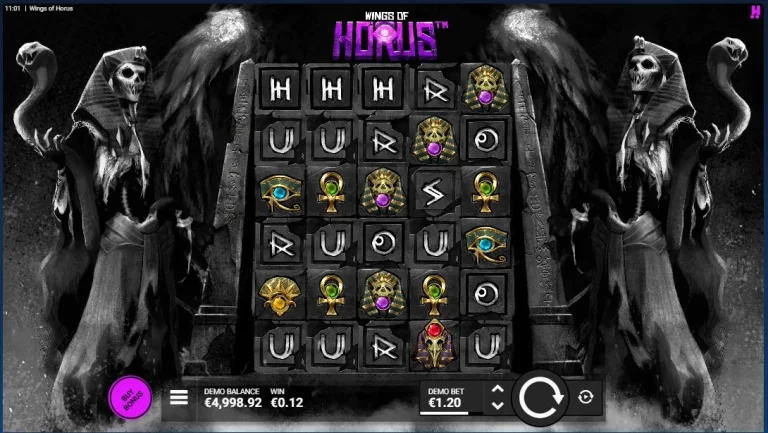
Wings of Horus slot review 2026 – Egyptian theme Casino game

Sumo Supreme Megaways Review [Pragmatic Play]

How to Stop Gambling: A Practical Plan

UFO Pyramids slot review 2026 – Exploring the Alien-Egypt Connection