How to Read a Slot Paytable: The Complete Guide
What Is a Slot Paytable?
A slot paytable is the game’s rulebook — every symbol value, win mechanic, bonus trigger condition, and payout limit packed into a few screens. It doesn’t tell you whether you’ll win. It tells you how the game wins, which is the only thing you can actually act on.
Most players skip it and rely on animations to figure out what’s happening. That works until the first time you trigger a bonus and have no idea whether the multipliers stack or reset, or whether that scatter pays cash or just starts free spins. The paytable answers both questions before you risk a single cent.
Where to Find It
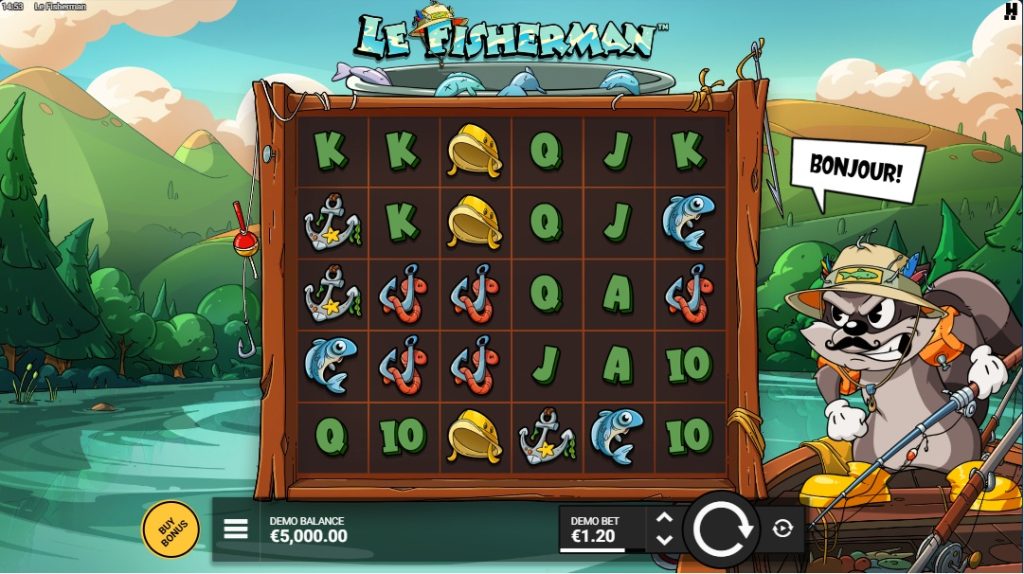
The paytable sits behind an icon in the game’s interface. Game providers use different labels — “i”, “?”, “Info”, “Help”, or a hamburger menu (three horizontal lines). On desktop it’s usually in a bottom corner. On mobile it might be tucked inside a menu that only appears when you pause the game.
Some providers (Hacksaw Gaming, NoLimit City) use multi-page scrollable panels. Others (Pragmatic Play, Play’n GO) split the content across clearly numbered tabs. Either way, the structure is the same: symbol values first, mechanics second, special rules last.
If you’re playing at a crypto casino and the game loads in a separate pop-up without the standard menu, look for a small gear or wrench icon — some provably fair games embed the rules in a separate “Game Info” section rather than the traditional paytable panel.
Symbol Values — Reading the Grid Correctly
The first page of any paytable shows a symbol chart. Icons rank from highest to lowest value, almost always from top to bottom. The top symbols are the “premiums” — theme characters, specific objects tied to the game’s narrative. Below them sit the “royals” or low-pays: playing card ranks (A, K, Q, J, 10, 9) or simplified geometric shapes.
Each symbol has a payout table attached to it showing how much it pays for landing 2, 3, 4, or 5 matching symbols in a winning combination (some symbols only pay for 3+).
Here’s the part most guides skip: these values are multipliers of your total bet per spin, not fixed cash amounts. A symbol listed as paying “500x” doesn’t pay €500 — it pays 500 times whatever your current total bet is.
Example:
| Symbols matched | Multiplier | Bet €0.20 | Bet €1.00 | Bet €5.00 |
|---|---|---|---|---|
| 3× Crown | 5x | €1.00 | €5.00 | €25.00 |
| 4× Crown | 50x | €10.00 | €50.00 | €250.00 |
| 5× Crown | 500x | €100.00 | €500.00 | €2,500.00 |
This is why two paytables that look identical at first glance can produce wildly different sessions depending on your bet size. Always read the symbol values in relation to your stake, not as abstract numbers.
How Your Real Payout Is Actually Calculated
Most guides mention that payouts are “multiples of your bet” and leave it there. The actual math is worth understanding.
Total bet = coin value × coins per line × number of active lines
Or, in modern slot terminology: total bet = stake per spin (a single number you adjust directly).
The paytable multiplier applies to that total stake. If you’re betting €0.50 per spin and the paytable shows a 1,000x win for a specific combination, you’ll receive €500.
Where it gets more complicated is in games that still use the older “coin” model. Some paytables express wins in coins rather than bet multipliers. In these cases you need to know:
- Coin value (e.g., €0.01 to €1.00 per coin)
- Coins per payline (e.g., 1–10)
- Number of active paylines (e.g., 20)
A win of “500 coins” in a game where you’re betting 1 coin on 20 lines at €0.01 per coin means: 500 × €0.01 = €5.00 — not €500. This coin model is mostly legacy at this point, but it still appears in older NetEnt and Microgaming titles commonly found in crypto casino libraries.
Paylines, Ways to Win, and Cluster Pays — Why It Matters
The paytable’s win mechanics section tells you how matching symbols form a valid win. This isn’t decoration — it fundamentally changes how often wins appear.
Fixed Paylines
A set number of predetermined lines (usually 10, 20, or 25) run across the reels. Symbols must land on an active payline, always from left to right on consecutive reels. A 20-payline slot has exactly 20 ways to win on any given spin.
Ways-to-Win (243 Ways, 1,024 Ways)
Wins form whenever matching symbols land on adjacent reels, regardless of exact row position. A 5-reel slot with 3 rows gives 3×3×3×3×3 = 243 ways to win. Some games use 4 rows (1,024 ways) or even 5 rows per reel (3,125 ways). The paytable for these games will say something like “pay anywhere on adjacent reels from left to right” — look for that phrase.
Megaways (up to 117,649 ways)
Each reel shows a random number of symbols per spin (typically 2–7). Ways-to-win multiply across reels dynamically. At maximum height (7 symbols per reel), a 6-reel game produces 7⁶ = 117,649 ways to win. The paytable for Megaways games will explicitly state the maximum ways-to-win figure. This matters because your effective cost per way is much lower than in a fixed-payline game.
Cluster Pays
Wins form when 5 or more identical symbols touch horizontally or vertically anywhere on the grid. Paytables for cluster games usually express payouts by cluster size — “5+ symbols: 0.5x, 10+ symbols: 2x, 15+ symbols: 10x” — rather than by number of matching symbols per line. Read this section carefully: winning cluster thresholds vary wildly between providers.
Scatter Pays (Pay Anywhere)
Any position on the grid counts, no adjacency required. 3+ identical symbols anywhere = win. This is the broadest possible mechanic. If the paytable says “pays anywhere,” skipped reels do not invalidate a win.
Practical note: Competitors’ guides mention these mechanics but rarely explain that fixed-payline games look cheaper per spin than Megaways titles, yet the Megaways game might have a significantly lower cost per way-to-win. Check your effective cost per opportunity, not just the headline stake.
Wild Symbols: More Than Just a Substitute
Every paytable has a wild symbols section. The baseline behavior — wilds substitute for regular pay symbols to complete winning combinations — is consistent across providers. What varies is everything else.
Look for these wild variants in the paytable rules:
- Standard Wild: Substitutes on the reel it lands. No special behavior.
- Expanding Wild: Expands to cover the entire reel. Common in games like Starburst and Book of Dead.
- Sticky Wild / Locked Wild: Stays in place for one or more subsequent spins (respins or free spins).
- Stacked Wild: Appears as a stack of wilds on a single reel, potentially covering all positions.
- Walking Wild: Moves one position after each spin until it falls off the grid.
- Multiplier Wild: Applies a multiplier (2x, 3x, etc.) to any win it contributes to. Some stack multiplicatively when multiple multiplier wilds land in the same win.
- Colossal Wild / Giant Wild: Occupies a 2×2 or 3×3 block on the grid.
The paytable should also state whether wilds substitute for scatter symbols. In almost all games they do not — but always verify, because some newer titles (particularly from Hacksaw and Print Studios) use hybrid mechanics where wilds partially interact with scatter behavior.
Scatter Symbols and Bonus Triggers
Scatters trigger features. The paytable’s scatter section tells you three things:
- How many scatters you need — typically 3, sometimes 4 or 5 for better rewards.
- Where they need to land — most modern games accept scatter anywhere on the grid, but some classic-style slots require scatters on specific reels.
- What happens when triggered — free spins count, multiplier assigned, bonus game launched, or instant cash award.
Some scatters also carry their own cash payout independent of the feature trigger. Check the paytable: a “Scatter pays 2x for 2 anywhere” entry means you get that award plus the feature if you hit 3+.
A detail competitors rarely spell out: most paytables describe the minimum free spins award from triggering scatters during the base game. Re-trigger rules during free spins — whether additional scatters give you extra spins, restart the counter, or do nothing — are listed in the free spins rules subsection, which is a separate part of the paytable from the main scatter description.
The Free Spins Paytable vs. the Base Game Paytable
This is one of the most significant gaps in most slot guides. Many games have fundamentally different rules during free spins compared to the base game.
What commonly changes during free spins:
- Symbol pay values (sometimes doubled or tripled)
- Wild behavior (walking wilds, sticky wilds replacing standard wilds)
- Multiplier mechanics that don’t exist in the base game
- Payline count (some games switch to all-ways during free spins)
- Reels that were unavailable in base game becoming active
The paytable’s free spins section documents these changes. Look for a heading like “Free Spins Rules”, “Bonus Game”, or “Feature Rules” — it will be a separate panel from the base game symbol values. If the game has a multiplier trail or progressive multiplier during free spins (common in high-volatility games from NoLimit City and BTG), the paytable explains whether the multiplier resets between spins or accumulates throughout the entire round.
Why this matters practically: A game with a 96% RTP might derive the majority of its theoretical return from the bonus round, not the base game. If you don’t know how the free spins round pays, you don’t know what you’re actually buying access to.
RTP — What the Number Actually Means
Return to Player (RTP) is the theoretical percentage of all money wagered that a game pays back over an infinite number of spins. A 96% RTP slot returns €96 for every €100 staked — in theory, over millions of spins, across all players combined.
What the paytable shows is the designed RTP, sometimes called the certified or published RTP. This is the figure regulators require providers to disclose.
Three things the RTP figure does not tell you:
- It doesn’t predict your session outcome. RTP converges toward its theoretical value over tens of millions of spins. In a 200-spin session, your variance will be enormous regardless of whether the RTP is 94% or 97%.
- Multiple RTP variants may exist. Many providers build games with configurable RTP settings — for example, 94%, 96%, and 96.5% versions of the same title. Casinos choose which version to deploy. The figure published in the paytable reflects the variant that casino is running. Crypto casinos operating under lighter regulatory frameworks sometimes deploy lower-RTP variants. If a game’s published RTP on the provider’s official page differs from what the in-game paytable shows, you’re playing the lower-RTP version.
- RTP doesn’t account for bonus features separately. The single headline number blends base game and bonus round returns. A game with 94% headline RTP might have a 90% base game RTP and a 96% bonus RTP. Some providers (NoLimit City being notable for this) publish detailed RTP breakdowns by feature; most don’t.
Volatility and Hit Frequency
Volatility (also called variance) describes how a game distributes its payouts. High-volatility games pay less often but pay more when they do. Low-volatility games pay frequently but in smaller amounts.
Hit frequency is the percentage of spins that produce any winning combination at all. A slot with 25% hit frequency pays on 1 in every 4 spins. This figure is distinct from volatility, though they correlate — and most competitors conflate the two.
Most paytables describe volatility qualitatively: Low, Medium, Medium-High, High, or Very High. A few providers quantify it on a numbered scale (BetMGM shows 1–5; some Pragmatic Play paytables show a meter).
What the paytable rarely discloses is the hit frequency. You can estimate it from the symbol probability tables if the provider publishes them in the paytable (uncommon) or infer it from the “pays for 2+” entries in the symbol grid — games where many symbols pay for only 2 of a kind have higher surface hit frequencies.
Reading volatility practically:
| Volatility | Typical session behavior | Suitable for |
|---|---|---|
| Low | Small wins every few spins, rare big hits | Demo play, low bankroll, casual sessions |
| Medium | Mix of dry spells and medium hits | Most recreational players |
| High | Long losing streaks punctuated by large wins | Players with larger bankrolls, bonus hunters |
| Very High / Extreme | Rare wins, most return concentrated in bonus | Short high-stake sessions, feature buy users |
The Max Win Figure — How to Read It Without Being Misled
Every modern slot paytable includes a maximum win figure, expressed as a multiplier of the stake (e.g., 10,000x, 50,000x, 250,000x). This is the theoretical ceiling for a single spin payout.
Three things to check in the paytable’s max win section:
1. Does the max win apply only within the bonus round? A 50,000x max win might be achievable only during free spins with a maxed-out multiplier — not from any base game combination. If the paytable says “maximum win applies in Free Spins,” the base game has a different (usually much lower) effective ceiling.
2. Are there separate mode-specific caps? Some games (Hacksaw Gaming’s Chaos Crew series; BTG’s Bonanza variants) have a hard cap on the bonus round payout that differs from the theoretical max win. The paytable will note something like “maximum win per free spins round: 5,000x” even if the theoretical game max is higher.
3. Does the casino impose an additional max win limit? Casinos, especially crypto platforms, often cap single-spin or single-round wins independently of the game’s built-in max win. This limit lives in the casino’s terms and conditions, not the paytable — but it’s worth checking before playing a high-volatility title where you’re specifically targeting large multipliers.
The probability of actually hitting the stated max win is vanishingly small in most cases. For extreme-volatility titles (NoLimit City’s Tombstone RIP at 66,666x, BTG’s Gold Cash Freespins at 10,000x), the max win represents a mathematical possibility built into the RNG, not a realistic expectation.
Feature Buy Entries in the Paytable
Bonus Buy (also called Feature Buy or Ante Bet) allows players to pay a premium — typically 50x to 200x the base stake — to enter the bonus round directly without waiting for scatters to land organically.
The paytable’s feature buy section should specify:
- The cost multiplier (e.g., “Bonus Buy costs 100x your bet”)
- What the purchased feature delivers (immediate free spins with specific starting conditions, a guaranteed scatter landing on the next spin, etc.)
- Whether the RTP differs for the feature buy mode vs. organic play
This last point is important. Many games publish a higher RTP for the feature buy mode (e.g., 96.5% standard, 97.1% feature buy) because you’re paying market rate for guaranteed bonus access. Others carry a lower feature buy RTP as a convenience premium. The paytable doesn’t always disclose this split — check the provider’s official game page or regulatory math sheet if available.
Modern Mechanics: Cascading Reels, Multiplier Trails, and More
Modern slots have layered their base mechanics with additional systems that are easy to miss if you don’t read past the first paytable screen. Here’s what to look for:
Cascading / Tumbling Reels: Winning symbols disappear and new ones fall in to replace them, potentially creating chain wins from a single spin. The paytable will state whether multipliers increase with each cascade and what the cascade multiplier ceiling is.
Multiplier Trail / Meter: A persistent counter that increases as specific events occur (wins, scatters landing, consecutive winning spins). Often the multiplier resets between spins in the base game but persists for the entire free spins round. NoLimit City games (Money Train series, San Quentin) use this mechanic heavily.
Reel Modifiers: Random events that alter the reel layout mid-spin — giant symbols landing, entire reels becoming wild, symbols morphing. The paytable explains what triggers these and what combinations are possible.
Bonus Buy Variations: Some games offer multiple buy options (e.g., “Standard Free Spins for 75x, Enhanced Free Spins for 150x”). The paytable details what differs between purchase tiers.
Ante Bet: Some Pragmatic Play games offer an optional ante that increases scatter probability at a cost of roughly 25% more per spin. If you activate the ante, your effective spin cost increases and the RTP is recalculated. The paytable notes both states.
How to Compare Two Paytables Before You Play
Most casino players pick games by theme or interface. Players who read paytables can pick games by expected value profile. Here’s a practical comparison framework:
| Factor | What to check | Better for session play |
|---|---|---|
| Top symbol multiplier | Highest single-symbol payout vs. stake | Higher = potentially larger wins |
| Low-pay symbol values | Does the bottom tier pay at least 0.5x for 5? | Yes = more base game cash flow |
| Win mechanic | Fixed paylines vs. ways vs. cluster | Ways/cluster = more frequent small hits |
| RTP | Paytable figure | ≥96% preferred |
| Volatility | Descriptor in paytable | Match to your bankroll |
| Max win | Stated multiplier | Lower max = more balanced distribution |
| Bonus trigger frequency | Not always stated, but look for scatter count required | 3-scatter trigger = more frequent than 4-scatter |
| Cascade multipliers | Present vs. absent | Present = higher potential per feature |
Two 96% RTP, high-volatility games can play completely differently depending on whether the low-pay symbols are generous or near-worthless. A game that pays 0.1x for 5-of-a-kind low symbols will drain your bankroll in dead spins, even with the same headline volatility rating as a game where low symbols pay 0.5x.
Crypto Casino Notes: What the Paytable Doesn’t Tell You
Most slot paytable guides are written for regulated fiat casinos. Crypto casino players face a few additional considerations.
Configured RTP variants: Crypto platforms operating outside strict licensing regimes (MGA, UKGC) sometimes run games at the lowest available RTP configuration. If a game’s provider page lists RTP as “96.5%” but the in-game paytable shows “94.0%”, you’re on the lower-RTP version. Check before playing.
Bet sizing in crypto vs. displayed stake: The paytable’s multipliers apply to your bet-per-spin in the casino’s base currency, which for crypto casinos is often mBTC, mETH, or USDT. Make sure you understand the conversion. A 1,000x win on a 0.001 BTC bet is 1 BTC, which sounds enormous — but verify your actual stake value in fiat terms before reading those multiplier tables.
Provably fair note: Provably fair mechanisms (common at Wolfbet and similar crypto-native casinos) affect the verifiability of outcomes, not the paytable math itself. The paytable’s stated RTP and max win figures are still the relevant benchmarks. The provably fair hash lets you verify individual outcomes; the paytable tells you what those outcomes are worth.
Jurisdiction-based feature restrictions: Bonus Buy is prohibited in some jurisdictions (notably the UK). If a crypto casino serves a global player base, the feature buy paytable section may appear in-game but be greyed out depending on your detected region. This is a casino-side setting, not a provider one — the paytable will still display the feature buy information even if it’s inaccessible.
Practical Checklist Before Every Session
Open the paytable before your first real-money spin. Run through this in 60–90 seconds:
- What is the RTP? Is it ≥95%? Does it match the provider’s published figure?
- What is the volatility? Does it match your bankroll depth and session goal?
- What is the win mechanic? Fixed lines, ways, cluster, or scatter pays?
- What does the top symbol pay? 5-of-a-kind × your stake = target hit value.
- What triggers the bonus? How many scatters, and do they need to land in specific positions?
- Does the bonus round change the paytable? Note any multiplier mechanics or wild upgrades.
- What is the max win? Is it achievable in base game or only via bonus?
- Is there a Bonus Buy? What does it cost and what does it deliver?
- Are there any hard win caps? In-game or at casino level (check T&Cs).
This isn’t an exhaustive deep-dive — it’s the minimum information that makes your session interpretable. If you can’t answer these questions before you play, you’re gambling blind.
FAQ
What is a slot paytable?
A slot paytable is the in-game information panel that documents all symbol values, win mechanics, special symbol rules, bonus trigger conditions, RTP, and volatility for that specific game. Every licensed slot is required to have one.
Where is the paytable in online slots?
Look for an “i”, “?”, “Info”, or “Help” icon in the game interface — typically in a bottom corner or inside a hamburger menu. On mobile, it may be accessible via a pause screen.
What does RTP mean in a slot paytable?
RTP (Return to Player) is the theoretical percentage of all wagered money that the game returns to players over millions of spins. A 96% RTP means the game is mathematically designed to return €96 for every €100 wagered across all players over time. It is not a per-session guarantee.
What is a high-volatility slot?
A high-volatility slot pays out less frequently but produces larger wins when it does pay. High-volatility games carry a higher risk of long losing streaks. They are best suited for players with larger bankrolls who can sustain variance.
What does max win mean in a paytable?
The max win is the highest possible payout expressed as a multiplier of your stake (e.g., 10,000x). It represents the mathematical ceiling the game’s RNG can produce — achievable under specific conditions that typically require the bonus round with maximum multipliers active.
Can the casino change the RTP from what’s shown in the paytable?
Yes. Many providers offer multiple RTP configurations (e.g., 94%, 96%, 96.5%) that casinos select when licensing a game. The in-game paytable should reflect the active RTP for that casino’s version. If you see a discrepancy between the paytable figure and the provider’s official game page, you are playing the lower-RTP variant.
What is the difference between a wild and a scatter symbol?
Wilds substitute for regular pay symbols to complete winning combinations on active paylines or win mechanics. Scatters trigger features (free spins, bonus games) by appearing anywhere on the reels regardless of payline position. Most wilds do not substitute for scatters, and most scatters do not function as wilds.
Do paytable payouts change during free spins?
Often yes. Many games modify symbol values, add multipliers, or change wild behavior during free spins. This is documented in a separate “Free Spins Rules” section of the paytable, distinct from the base game symbol grid.
What is a Megaways paytable?
Megaways slots use a dynamic reel mechanic where the number of symbols per reel changes every spin, creating up to 117,649 ways to win. The paytable for Megaways games states the maximum ways-to-win possible and documents how cascade multipliers (if present) accumulate and reset during free spins.
Is a higher max win always better?
Not necessarily. A higher max win often correlates with more extreme volatility and lower base game returns. Games with astronomical max wins (50,000x+) typically require specific, rare conditions in the bonus round and deliver most of their RTP through those rare events. For most players, a lower max win with more consistent bonus payouts provides a more manageable session experience.
This guide covers both traditional reel mechanics and modern video slot formats. Game paytable layouts vary by provider. Always verify the active RTP version directly in-game before playing with real money.
About the author
Marcus Reed
80 articlesTrending
Golden Joker 27 by 1spin4win Review
What Are Trips in Poker
Bankroll Management Tips for Crypto Dice Players

$320 Million, the Best-Paid “Day Job” in Crypto History
![Best casino payment methods 2025 [GUIDE]](https://wolfbet.com/blog/wp-content/uploads/2025/01/Best-casino-payment-methods-2025-GUIDE-e1737651624356-768x271.jpeg)

![Progressive Jackpots: Types, Odds and How They Work [GUIDE]](https://wolfbet.com/blog/wp-content/uploads/2025/02/progressive-jackpot-e1738690660810.jpg)