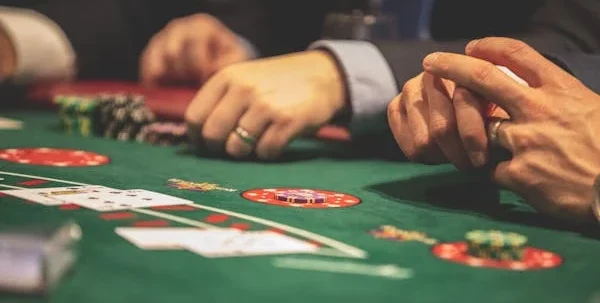
Can You Actually Win at Roulette? The Spins That Made History

The man who broke the bank at Monte Carlo (1891)
Charles Wells is the single most famous name in roulette history. In July 1891, he walked into the Casino de Monte Carlo and, over an eleven hour session, is reported to have won 23 out of 30 consecutive spins, turning a starting bankroll of around 4,000 francs into roughly 1 million francs, worth several million dollars today. He won so much that the casino ran out of chips at his table and had to pause play to bring in more, an event called breaking the bank, which became the origin of the phrase itself. He came back and did it again on a second visit.
Wells later claimed he had spent six years developing a system. Casino investigators at the time found no evidence of cheating. Most historians today chalk it up to an extraordinary, once in a lifetime streak of luck rather than any working strategy, no betting system can overcome the built-in house edge over the long run. The story was popular enough to inspire the 1892 music hall song The Man Who Broke the Bank at Monte Carlo. Wells himself later went to prison for fraud in an unrelated matter and died broke in Paris in 1922, a detail that tends to get left out of the more romantic versions of the story.
Slots to try on Wolfbet Casino





The engineer who found a flaw in the wheel (1873)
Not every roulette legend is about luck. In 1873, English engineer Joseph Jagger did something categorically different: he hired clerks to record thousands of spins at six different wheels at the Beaux-Arts Casino in Monte Carlo, looking for a mechanical bias, a wheel that was not perfectly balanced and therefore favored certain numbers over others.
He found one, and bet heavily on the numbers it favored. The casino accused him of cheating, but investigators found nothing illegal, physical imperfections in a wheel are not a rules violation, just a manufacturing flaw nobody else had bothered to measure. Jagger’s approach is the closest thing on this list to an actual repeatable strategy, though it depended entirely on a specific, poorly maintained physical wheel, a vulnerability that does not exist in a provably fair digital game.
Selling everything for one spin (2004)
In 2004, British gambler Ashley Revell sold every possession he owned, his house, his car, even his clothes, to raise $135,300. He flew to the Plaza Hotel and Casino in Las Vegas, walked up to a roulette table, and placed the entire amount on a single spin, betting on red.
The ball landed on red 7. Revell walked away having doubled his life savings in about twenty seconds, an event later documented in the Sky One special Double or Nothing. It remains one of the most extreme single-bet gambles ever filmed, precisely because the odds were close to a coin flip and he bet literally everything he had on it.
Betting big on a lucky number (2008)
British retail billionaire Mike Ashley, known for owning Newcastle United, placed a series of bets at a private members club in Mayfair centered entirely around the number 17, covering it along with related splits, corners, streets and six-line combinations, plus outside bets on black, odd, and low numbers. When the ball landed on 17, the combined payout came to roughly £1.3 million from an estimated £480,000 in total stakes across the various covering bets.
This one is less pure luck than it looks. Covering a number with multiple overlapping bets is a real, mathematically understood way to increase the frequency of smaller wins, though it does not change the underlying house edge, it just changes the shape of the risk.
So, can you actually win at roulette?
Here is the honest answer behind all four stories: yes, people win at roulette, sometimes enormously, and it happens more often than the stories suggest, just usually in smaller amounts that never make the news. What none of these stories change is the math underneath the game. Every spin still carries the same house edge, and no betting system, patch of luck, or number of times you have seen 17 recently changes the odds of the next spin.
What the stories actually have in common is variance, not a secret method. Roulette is a short-term, high-variance game, which is exactly why a lucky night can turn $135,300 into $270,600 in twenty seconds. The same variance that produces legendary wins produces legendary losses just as easily, they simply do not get songs written about them.
Where the wheel itself came from
The device behind all four of these stories was not built for gambling at all. In 1655, French mathematician and physicist Blaise Pascal accidentally created an early version of the roulette wheel while trying to invent a perpetual motion machine. The mechanism evolved by merging an earlier wheel game from around 1720 with an Italian game called Biribi, and the game in roughly its modern form was being played in Paris by at least 1796.
The single most important design change came in 1842, when François and Louis Blanc created a wheel with a single zero specifically for the Prince of Monaco, increasing the house edge and becoming the template for what is now called European roulette, the same style of wheel Charles Wells sat down at half a century later.
How roulette actually works
Strip away the legends, and the mechanic behind every one of these stories is simple.
- A wheel has 37 pockets in European roulette (numbers 1 to 36 plus a single zero), or 38 in American roulette (which adds a second zero, raising the house edge further)
- Players place bets before the spin, on a single number, a group of numbers, a color, or odd/even
- The wheel spins and a ball is released in the opposite direction, landing in one pocket at random
- Online, this spin is generated by a provably fair system rather than a physical wheel, so the result can be independently verified
- Payouts scale with how specific the bet was: a single straight-up number pays 35 to 1, while a bet on red or black pays even money
From a 17th century physics experiment gone sideways, to a broken bank in Monte Carlo, to a man who bet his entire life on one spin of red, roulette has spent almost 400 years proving the same thing over and over: the wheel does not remember who won yesterday, it just spins.
Here’s a link to spin the wheel yourself, no house history required -> Play Roulette at Wolfbet
About the author
Marcus Reed
90 articlesTrending
![Sic Bo Basics for Beginners [GUIDE]](https://wolfbet.com/blog/wp-content/uploads/2025/01/sicbo-beginners-768x439.webp)
Sic Bo Basics for Beginners [GUIDE]

Wolf.Bet Weekly Recap #3

3 Egypt Chests Slot Review: Uncover 5,000x Jackpots with Hold and Win Respins
How to Play Casino Bingo?

![Battle Tanks slot Review [Pragmatic Play]](https://wolfbet.com/blog/wp-content/uploads/2025/02/battle-tanks-evoplay-screenshot-war-themed-slot-768x372.jpg)
![3 Simple Ways To Profit from Blockchain Technology [How To]](https://wolfbet.com/blog/wp-content/uploads/2025/01/how-to-profit-from-blockchain-1-768x384.jpg)